

-
1 reconcile
transitive verb1) (restore to friendship) versöhnen2) (resign oneself)reconcile oneself or become/be reconciled to something — sich mit etwas versöhnen
3) (make compatible) in Einklang bringen [Vorstellungen, Überzeugungen]; (show to be compatible) miteinander vereinen4) (settle) beilegen [Meinungsverschiedenheit]* * *1) (to cause (people) to become friendly again, eg after they have quarrelled: Why won't you be reconciled (with him)?) versöhnen2) (to bring (two or more different aims, points of view etc) into agreement: The unions want high wages and the bosses want high profits - it's almost impossible to reconcile these two aims.) in Einklang bringen3) (to (make someone) accept (a situation, fact etc) patiently: Her mother didn't want the marriage to take place but she is reconciled to it now.) sich abfinden•- academic.ru/60760/reconciliation">reconciliation* * *rec·on·cile[ˈrekənsaɪl]vt▪ to \reconcile sb jdn versöhnenmy brother and I were finally \reconciled with [or to] each other mein Bruder und ich haben uns schließlich versöhntto \reconcile a conflict einen Streit schlichtento \reconcile differences Meinungsverschiedenheiten beilegenit's difficult to \reconcile different points of view es ist schwierig, verschiedene Standpunkte unter einen Hut zu bringen▪ to \reconcile sth and [or with] sth etw mit etw dat vereinbaren [o abstimmen] [o in Einklang bringen]to \reconcile accounts/one's checkbook AM FIN Konten/sein Scheckbuch abgleichen3. (accept)to be \reconciled to sth an etw akk gewöhnt seinhe slowly became \reconciled to living a solitary life langsam gewöhnte er sich daran, ein einsames Leben zu führen* * *['rekənsaɪl]vtthey became or were reconciled — sie versöhnten sich, sie söhnten sich aus
2) (= make compatible) facts, ideas, theories, principles miteinander in Einklang bringen, miteinander vereinbarento reconcile sth with sth — etw mit etw in Einklang bringen, etw mit etw vereinbaren
these ideas cannot be reconciled with the plans — diese Ideen sind mit den Plänen unvereinbar
how do you reconcile that with the fact that you said no last week? — wie lässt sich das damit vereinbaren, dass Sie letzte Woche nein or Nein gesagt haben?
3)(= make accept)
to reconcile sb to sth — jdn mit etw versöhnento reconcile oneself to sth, to become reconciled to sth —
what reconciled him to it was... — was ihn damit versöhnte, war...
* * *reconcile [ˈrekənsaıl] v/tto, with mit):reconcile o.s. to, become reconciled to fig sich versöhnen oder abfinden oder befreunden mit, sich in sein Schicksal etc fügen;be reconciled to sich abgefunden haben mit;reconcile o.s. to doing sth sich mit dem Gedanken befreunden, etwas zu tun2. einen Streit etc beilegen, schlichten3. in Einklang bringen (with, to mit)* * *transitive verb1) (restore to friendship) versöhnenreconcile oneself or become/be reconciled to something — sich mit etwas versöhnen
3) (make compatible) in Einklang bringen [Vorstellungen, Überzeugungen]; (show to be compatible) miteinander vereinen4) (settle) beilegen [Meinungsverschiedenheit]* * *v.aussöhnen v.versöhnen v. -
2 fault
- ток повреждения
- сверхток
- сброс
- сбой
- разлом
- повреждение (цепи, линии, устройства)
- повреждение (во взрывозащите)
- повреждение
- ошибка
- отказ
- ненормальный режим работы
- неисправность
- неисправное состояние
- нарушение
- короткое замыкание
- дизъюктивное нарушение
- дефект
- выход из строя
- аварийное сообщение
аварийное сообщение
-Параллельные тексты EN-RU
The system offers diagnostic and statistics functions and configurable warnings and faults, allowing better prediction of component maintenance, and provides data to continuously improve the entire system.
[Schneider Electric]Система (управления электродвигателем) предоставляет оператору различную диагностическую и статистическую информацию и позволяет сконфигурировать предупредительные и аварийные сообщения, что дает возможность лучше планировать техническое обслуживание и постоянно улучшать систему в целом.
[Перевод Интент]Various alarm notifications are available to indicate a compromised security state such as forced entry and door position.
[APC]Устройство может формировать различные аварийные сообщения о нарушении защиты, например, о несанкционированном проникновении или об изменении положения двери.
[Перевод Интент]
Тематики
EN
выход из строя
—
[Я.Н.Лугинский, М.С.Фези-Жилинская, Ю.С.Кабиров. Англо-русский словарь по электротехнике и электроэнергетике, Москва, 1999 г.]
выход системы из строя
вследствие отказа аппаратного или программного обеспечения либо средств связи
[Англо-русский толковый словарь терминов и сокращений по ВТ, Интернету и программированию. © 1998-2007 гг., Э.М. Пройдаков, Л.А. Теплицкий. 13,8 тыс. статей.]
выход из строя
-
[Интент]Единичные выходы из строя в процессе испытаний элементов электронной техники (микросхем, электровакуумных и полупроводниковых приборов, конденсаторов, резисторов, кварцевых резонаторов и т.д.), а также ламп накаливания и предохранителей не могут служить основанием для прекращения испытаний, если это не вызвано недостатком конструкции прибора.
При повторных выходах из строя тех же элементов испытания следует считать неудовлетворительными.
[ ГОСТ 24314-80]При выходе из строя отдельно стоящих вентиляторов на двигателях мельниц, дымососов, мельничных вентиляторов, вентиляторов первичного воздуха и т.д. необходимо при первой возможности, но не позже чем его допускается заводской инструкцией, отключить двигатель 6 кВ для ремонта вентилятора охлаждения двигателя.
[РД 34.20.565]Судовая электрическая сеть, предназначенная для передачи электроэнергии при выходе из строя линий электропередачи силовой сети или исчезновении напряжения
[ ГОСТ 22652-77]Тематики
Синонимы
EN
дизъюктивное нарушение
Относительное перемещение частей пластов вдоль плоскости их разрыва (геол.)
[ http://slovarionline.ru/anglo_russkiy_slovar_neftegazovoy_promyishlennosti/]Тематики
EN
короткое замыкание
Случайное или намеренное соединение резистором или импедансом со сравнительно низким сопротивлением двух или более точек в цепи, нормально находящихся под различным напряжением.
Случайное или намеренное низкоимпедансное или низкоомное соединение двух или более точек электрической цепи, нормально находящихся под разными электрическими потенциалами. (вариант компании Интент)
МЭК 60050(151-03-41) [2].
[ ГОСТ Р 50030. 1-2000 ( МЭК 60947-1-99)]
короткое замыкание
Случайный или преднамеренный проводящий путь между двумя или более проводящими частями, принуждающий различия электрических потенциалов между этими проводящими частями становиться равными или близкими к нулю.
Короткое замыкание обычно возникает в аварийном режиме электроустановки здания при повреждении изоляции токоведущих частей, находящихся под разными электрическими потенциалами, и возникновении между этими частями электрического контакта, имеющего пренебрежимо малое полное сопротивление. Короткое замыкание также может быть следствием ошибочных действий, совершаемых персоналом при монтаже и эксплуатации электроустановки здания, когда соединяют между собой проводящие части, которые в нормальном режиме находятся под разными электрическими потенциалами.
Короткое замыкание характеризуется током короткого замыкания, который, многократно превышая номинальный ток электрической цепи, может вызвать возгорание её элементов и явиться причиной пожара в здании. Поэтому в электроустановках зданий всегда проводят мероприятия, направленные на снижение вероятности возникновения короткого замыкания, а также выполняют защиту от короткого замыкания с помощью устройств защиты от сверхтока.
[ http://www.volt-m.ru/glossary/letter/%CA/view/27/]
короткое замыкание
Случайное или преднамеренное соединение двух или более проводящих частей, вызывающее снижение разности электрических потенциалов между этими частями до нуля или значения, близкого к нулю.
[ ГОСТ Р МЭК 60050-195-2005]
короткое замыкание
КЗ
замыкание, при котором токи в ветвях электроустановки, примыкающих к месту его возникновения, резко возрастают, превышая наибольший допустимый ток продолжительного режима
[Методические указания по защите распределительных электрических сетей напряжением 0,4-10 кВ от грозовых перенапряжений]EN
short-circuit
accidental or intentional conductive path between two or more conductive parts forcing the electric potential differences between these conductive parts to be equal to or close to zero
Source: 151-03-41 MOD
[IEV number 195-04-11]FR
court-circuit
chemin conducteur accidentel ou intentionnel entre deux ou plusieurs parties conductrices forçant les différences de potentiel électriques entre ces parties conductrices à être nulles ou proches de zéro
Source: 151-03-41 MOD
[IEV number 195-04-11]Параллельные тексты EN-RU
A short-circuit is a low impedance connection between two conductors at different voltages.
[ABB]Короткое замыкание представляет собой низкоомное соединение двух проводников, находящихся под разными потенциалами.
[Перевод Интент]Тематики
- электробезопасность
- электротехника, основные понятия
Синонимы
- КЗ
EN
DE
FR
нарушение
[Департамент лингвистических услуг Оргкомитета «Сочи 2014». Глоссарий терминов]EN
fault
Another term for offense.
[Департамент лингвистических услуг Оргкомитета «Сочи 2014». Глоссарий терминов]
Тематики
EN
неисправное состояние
Состояние объекта, при котором он не соответствует хотя бы одному из требований нормативно-технической и (или) конструкторской (проектной) документации.
[ ГОСТ 27.002-89]
[ОСТ 45.152-99]
неисправное состояние
неисправность
По ГОСТ 13377-75
[ ГОСТ 24166-80]
неисправное состояние
Состояние системы тревожной сигнализации, препятствующее реагированию системы на наличие опасности в соответствии с требованиями стандартов.
[ ГОСТ Р 50775-95]
[МЭК 839-1-1-88]Тематики
- надежность, основные понятия
- ремонт судов
- системы охраны и безопасности
- тех. обсл. и ремонт средств электросвязи
Обобщающие термины
Синонимы
EN
DE
FR
неисправность
отказ в работе
Состояние машины, характеризующееся неспособностью выполнять заданную функцию, исключая случаи проведения профилактического технического обслуживания, других запланированных действий или недостаток внешних ресурсов (например, отключение энергоснабжения).
Примечание 1
Неисправность часто является результатом повреждения самой машины, однако она может иметь место и без повреждения.
Примечание 2
На практике термины «неисправность», «отказ» и «повреждение» часто используются как синонимы.
[ ГОСТ Р ИСО 12100-1:2007]
неисправность
Состояние оборудования, характеризуемое его неспособностью выполнять требуемую функцию, исключая профилактическое обслуживание или другие планово-предупредительные действия, а также исключая неспособность выполнять требуемую функцию из-за недостатка внешних ресурсов.
Примечание - Неисправность часто является следствием отказа самого оборудования, но может существовать и без предварительного отказа.
[ГОСТ ЕН 1070-2003]
неисправность
Состояние технического объекта (элемента), характеризуемое его неспособностью выполнять требуемую функцию, исключая периоды профилактического технического обслуживания или другие планово-предупредительные действия, или в результате недостатка внешних ресурсов.
Примечания
1 Неисправность является часто следствием отказа самого технического объекта, но может существовать и без предварительного отказа.
2 Английский термин «fault» и его определение идентичны данному в МЭК 60050-191 (МЭС 191-05-01) [1]. В машиностроении чаще применяют французский термин «defaut» или немецкий термин «Fehler», чем термины «panne» и «Fehlzusstand», которые употребляют с этим определением.
[ ГОСТ Р ИСО 13849-1-2003]Тематики
EN
- abnormality
- abort
- abortion
- breakage
- breakdown
- bug
- defect
- disease
- disrepair
- disturbance
- fail
- failure
- failure occurrence
- fault
- faultiness
- fouling
- health problem
- layup
- malfunction
- problem
- shutdown
- trouble
DE
FR
ненормальный режим работы электротехнического изделия
Режим работы электротехнического изделия (электротехнического устройства, электрооборудования), при котором значение хотя бы одного из параметров режима выходит за пределы наибольшего или наименьшего рабочего значения.
[ ГОСТ 18311-80]
К ненормальным относятся режимы, связанные с отклонениями от допустимых значений величин тока, напряжения и частоты, опасные для оборудования или устойчивой работы энергосистемы.
Рассмотрим наиболее характерные ненормальные режимы.а) Перегрузка оборудования, вызванная увеличением тока сверх номинального значения. Номинальным называется максимальный ток, допускаемый для данного оборудования в течение неограниченного времени.
Если ток, проходящий по оборудованию, превышает номинальное значение, то за счет выделяемого им дополнительного тепла температура токоведущих частей и изоляции через некоторое время превосходит допустимую величину, что приводит к ускоренному износу изоляции и ее повреждению. Время, допустимое для прохождения повышенных токов, зависит от их величины. Характер этой зависимости показан на рис. 1-3 и определяется конструкцией оборудования и типом изоляционных материалов. Для предупреждения повреждения оборудования при его перегрузке необходимо принять меры к разгрузке или отключению оборудования.б) Качания в системах возникают при выходе из синхронизма работающих параллельно генераторов (или электростанций) А и В (рис. 1-2, б). При качаниях в каждой точке системы происходит периодическое изменение («качание») тока и напряжения. Ток во всех элементах сети, связывающих вышедшие из синхронизма генераторы А и В, колеблется от нуля до максимального значения, во много раз превышающего нормальную величину. Напряжение падает от нормального до некоторого минимального значения, имеющего разную величину в каждой точке сети. В точке С, называемой электрическим центром качаний, оно снижается до нуля, в остальных точках сети напряжение падает, но остается больше нуля, нарастая от центра качания С к источникам питания А и В. По характеру изменения тока и напряжения качания похожи на к. з. Возрастание тока вызывает нагревание оборудования, а уменьшение напряжения нарушает работу всех потребителей системы. Качание — очень опасный ненормальный режим, отражающийся на работе всей энергосистемы.
в) Повышение напряжения сверх допустимого значения возникает обычно на гидрогенераторах при внезапном отключении их нагрузки. Разгрузившийся гидрогенератор увеличивает частоту вращения, что вызывает возрастание э. д. с. статора до опасных для его изоляции значений. Защита в таких случаях должна снизить ток возбуждения генератора или отключить его.
Опасное для изоляции оборудования повышение напряжения может возникнуть также при одностороннем отключении или включении длинных линий электропередачи с большой емкостной проводимостью.
Кроме отмеченных ненормальных режимов, имеются и другие, ликвидация которых возможна при помощи релейной защиты.[Чернобровов Н. В. Релейная защита. Учебное пособие для техникумов]
Тематики
- изделие электротехническое
- релейная защита
- электротехника, основные понятия
Синонимы
EN
отказ
Нарушение способности оборудования выполнять требуемую функцию.
Примечания
1. После отказа оборудование находится в неисправном состоянии.
2. «Отказ» является событием, в отличие от «неисправности», которая является состоянием.
3. Это понятие, как оно определено, не применяют коборудованиюобъекту, состоящему только из программных средств.
4. На практике термины «отказ» и «неисправность» часто используют как синонимы.
[ГОСТ ЕН 1070-2003]
[ ГОСТ Р ИСО 13849-1-2003]
[ ГОСТ Р МЭК 60204-1-2007]
отказ
Событие, заключающееся в нарушении работоспособного состояния объекта.
[ ГОСТ 27.002-89]
[ОСТ 45.153-99]
[СТО Газпром РД 2.5-141-2005]
[СО 34.21.307-2005]
отказ
Событие, заключающееся в нарушении работоспособного состояния машины и (или) оборудования вследствие конструктивных нарушений при проектировании, несоблюдения установленного процесса производства или ремонта, невыполнения правил или инструкций по эксплуатации.
[Технический регламент о безопасности машин и оборудования]EN
failure
the termination of the ability of an item to perform a required function
NOTE 1 – After failure the item has a fault.
NOTE 2 – "Failure" is an event, as distinguished from "fault", which is a state.
NOTE 3 – This concept as defined does not apply to items consisting of software only.
[IEV number 191-04-01]
NOTE 4 - In practice, the terms fault and failure are often used synonymously
[IEC 60204-1-2006]FR
défaillance
cessation de l'aptitude d'une entité à accomplir une fonction requise
NOTE 1 – Après défaillance d'une entité, cette entité est en état de panne.
NOTE 2 – Une défaillance est un passage d'un état à un autre, par opposition à une panne, qui est un état.
NOTE 3 – La notion de défaillance, telle qu'elle est définie, ne s'applique pas à une entité constituée seulement de logiciel.
[IEV number 191-04-01]Тематики
- безопасность в целом
- безопасность гидротехнических сооружений
- безопасность машин и труда в целом
- газораспределение
- надежность средств электросвязи
- надежность, основные понятия
Обобщающие термины
EN
DE
FR
повреждение
Повреждение любого элемента, разделения, изоляции или соединения между элементами, не являющихся неповреждаемыми по МЭК 60079-11 [8], при проведении испытаний на искробезопасность.
[ ГОСТ Р МЭК 60050-426-2006]
Тематики
EN
повреждение (цепи, линии, устройства)
-
[Интент]Тематики
- выключатель автоматический
- релейная защита
- электротехника, основные понятия
EN
разлом
—
[ http://www.eionet.europa.eu/gemet/alphabetic?langcode=en]EN
fault
A fracture or a zone of fractures along which there has been displacement of the sides relative to one another parallel to the fracture. (Source: BJGEO)
[http://www.eionet.europa.eu/gemet/alphabetic?langcode=en]Тематики
EN
DE
FR
сбой
Самоустраняющийся отказ или однократный отказ, устраняемый незначительным вмешательством оператора.
[ ГОСТ 27.002-89]
[ОСТ 45.153-99]
[СТО Газпром РД 2.5-141-2005]
сбой
Ненормальный режим, который может вызвать уменьшение или потерю способности функционального блока выполнять требуемую функцию.
Примечание
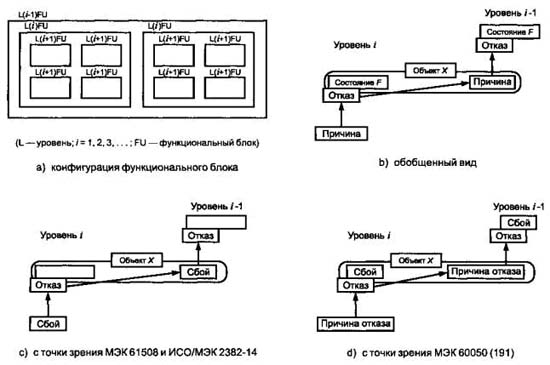
МЭС 191-05-01 определяет «сбой» как состояние, характеризуемое неспособностью выполнить необходимую функцию, исключая неспособности, возникающие во время профилактического ухода или других плановых мероприятий, либо в результате недостатка внешних ресурсов. Иллюстрация к этим двум точкам зрения показана на рисунке [ ИСО / МЭК 2382-14-01-10].
[ ГОСТ Р МЭК 61508-4-2007]Тематики
- газораспределение
- надежность средств электросвязи
- надежность, основные понятия
Обобщающие термины
EN
сброс
Разрывное нарушение, при котором сместитель падает в сторону опущенного крыла (висячее крыло опущено относительно лежачего).
[ Словарь геологических терминов и понятий. Томский Государственный Университет]Тематики
- геология, геофизика
Обобщающие термины
EN
сверхток
Любой ток, превышающий номинальный
МЭК 60050(441-11-06).
[ ГОСТ Р 50030. 1-2000 ( МЭК 60947-1-99)]
[ ГОСТ Р 50345-99( МЭК 60898-95)]
сверхток
Электрический ток, превышающий номинальный электрический ток.
Сверхток представляет собой любой электрический ток, величина которого превышает номинальный ток какого-либо элемента электроустановки здания или используемого в ней электрооборудования, например: номинальный ток электрической цепи, допустимый длительный ток проводника, номинальный ток автоматического выключателя и т. д. В нормативной и правовой документации различают два основных вида сверхтока – ток перегрузки и ток короткого замыкания.
Появление сверхтока в каком-либо элементе электроустановки здания может привести к его перегреву, возгоранию и, как следствие, к возникновению пожара в здании. Поэтому в электроустановках зданий выполняют защиту от сверхтока.
[ http://www.volt-m.ru/glossary/letter/%D1/view/59/]
сверхток
сверхток в электротехническом изделии
Ток, значение которого превосходит наибольшее рабочее значение тока электротехнического изделия (устройства).
[ ГОСТ 18311-80]
сверхток
Электрический ток, превышающий номинальный электрический ток.
Примечание - Для проводников номинальный ток считается равным длительному допустимому току.
[ ГОСТ Р МЭК 60050-826-2009]
Сверхток может оказывать или может не оказывать вредные воздействия в зависимости от его величины и продолжительности. Сверхтоки могут возникать в результате перегрузок в электроприемниках или при повреждениях, таких как короткие замыкания или замыканиях на землю
[ ГОСТ Р 50571. 1-2009 ( МЭК 60364-1: 2005)]
сверхток
Любой ток, превышающий номинальное значение. Для проводов номинальным значением является допустимый ток.
[ ГОСТ Р МЭК 60204-1-2007]EN
overcurrent
electric current exceeding the rated electric current
NOTE – For conductors, the rated current is considered as equal to the current-carrying capacity
[IEV number 826-11-14]
over-current
<>current exceeding the rated current
<>[IEC 61095, ed. 2.0 (2009-02)]
over-current
electric current the value of which exceeds a specified limiting value
[IEV number 151-15-28]
[IEV number 442-01-20]FR
surintensité, f
courant électrique supérieur au courant électrique assigné
NOTE – Pour des conducteurs, on considère que le courant assigné est égal au courant admissible.
[IEV number 826-11-14]
surintensité
courant supérieur au courant assigné
[IEC 61095, ed. 2.0 (2009-02)]
[IEV number 442-01-20]
surintensité, f
courant électrique dont la valeur dépasse une valeur limite spécifiée
[IEV number 151-15-28]Параллельные тексты EN-RU The design of LV installations leads to basic protection devices being fitted for three types of faults:
-
overloads
-
short-circuits
-
insulation faults
Низковольтные электроустановки должны быть оснащены устройствами защиты трех типов:
-
от перегрузки;
-
от короткого замыкания;
- от токов утечки.
[Перевод Интент]
Примечание.
Слово fault в данном случае пришлось опустить, поскольку:
- его нельзя перевести как "неисправность", т. к. возникновение перегрузки ( overload) не является неисправностью;
- его нельзя перевести как "сверхток", т. к. ток утечки не является сверхтоком.The chosen switchgear must withstand and eliminate faults at optimised cost with respect to the necessary performance.
[Schneider Electric]Выбранная аппаратура распределения должна иметь такие характеристики, чтобы рентабельно выдерживать и ограничивать сверхтоки.
[Перевод Интент]Тематики
Синонимы
EN
DE
FR
ток повреждения
Ток, возникающий в результате пробоя или перекрытия изоляции.
[ ГОСТ Р 51321. 1-2000 ( МЭК 60439-1-92)]
ток повреждения
Ток, который протекает через данную точку повреждения в результате повреждения изоляции.
[ ГОСТ Р МЭК 60050-826-2009]EN
fault current
current resulting from an insulation failure, the bridging of insulation or incorrect connection in an electrical circuit
[IEC 61439-1, ed. 2.0 (2011-08)]
fault current
current which flows across a given point of fault resulting from an insulation fault
[IEV number 826-11-11]FR
courant de défaut
courant résultant d'un défaut de l'isolation, du contournement de l’isolation ou d’un raccordement incorrect dans un circuit électrique
[IEC 61439-1, ed. 2.0 (2011-08)]
courant de défaut, m
courant s'écoulant en un point de défaut donné, consécutivement à un défaut de l'isolation
[IEV number 826-11-11]Тематики
EN
DE
- Fehlerstrom, m
FR
- courant de défaut, m
3.7.2 повреждение (fault): Повреждение любого элемента, разделения, изоляции или соединения между элементами, не являющимися по настоящему стандарту не повреждаемыми, от которых зависит искробезопасность цепи.
Источник: ГОСТ Р 52350.11-2005: Электрооборудование для взрывоопасных газовых сред. Часть 11. Искробезопасная электрическая цепь "I" оригинал документа
3.16 неисправность (fault): Состояние объекта, характеризующееся неспособностью исполнять требуемую функцию, исключая время профилактического технического обслуживания или других запланированных действий, или простои из-за недостатка внешних ресурсов
Примечание - Неисправность часто является результатом отказа объекта, но может существовать и без отказа.
Источник: ГОСТ Р 51901.6-2005: Менеджмент риска. Программа повышения надежности оригинал документа
3.6 неисправность (fault): Состояние элемента, характеризующееся неспособностью исполнять требуемую функцию, исключая период технического обслуживания, ремонта или других запланированных действий, а также из-за недостатка внешних ресурсов.
Примечание - Неисправность часто является результатом отказа элемента, но может существовать и без предшествующего отказа.
Источник: ГОСТ Р 51901.5-2005: Менеджмент риска. Руководство по применению методов анализа надежности оригинал документа
3.5 неисправность (fault): Состояние объекта, когда один из его элементов или группа элементов проявляют признаки деградации или нарушения работы, что может привести к отказу машины.
Примечания
1 Неисправность часто является следствием отказа, но может иметь место и при его отсутствии.
2 Состояние объекта не рассматривают как неисправное, если оно возникло вследствие запланированных процедур или нехватки внешних ресурсов.
Источник: ГОСТ Р ИСО 13379-2009: Контроль состояния и диагностика машин. Руководство по интерпретации данных и методам диагностирования оригинал документа
3.3 неисправность (fault): Состояние объекта, при котором он не способен выполнять требуемую функцию, за исключением такой неспособности при техническом обслуживании или других плановых мероприятиях или вследствие нехватки внешних ресурсов.
Примечания
1 Неисправность часто является следствием отказа объекта, но может иметь место и без него.
2 В настоящем стандарте термин «неисправность» используется наряду с термином «отказ» по историческим причинам.
Источник: ГОСТ Р 51901.12-2007: Менеджмент риска. Метод анализа видов и последствий отказов оригинал документа
3.1.30 ошибка (fault): Разность между погрешностью весоизмерительного датчика и основной погрешностью весоизмерительного датчика (см. 3.1.34).
Источник: ГОСТ Р 8.726-2010: Государственная система обеспечения единства измерений. Датчики весоизмерительные. Общие технические требования. Методы испытаний оригинал документа
3.6 дефект (fault): Неисправность или ошибка в компоненте технического обеспечения, программного обеспечения или системы
[МЭК 61513, пункт 3.22]
Примечание 1 - Дефекты могут подразделяться на случайные, например, в результате ухудшения аппаратных средств из-за старения, и систематические, например, ошибки в программном обеспечении, которые вытекают из погрешностей проектирования.
Примечание 2 - Дефект (в особенности дефект проекта) может остаться необнаруженным в системе до тех пор, пока не окажется, что полученный результат не соответствует намеченной функции, то есть возникает отказ.
Примечание 3 - См. также «ошибка программного обеспечения» и «случайный дефект».
Источник: ГОСТ Р МЭК 62340-2011: Атомные станции. Системы контроля и управления, важные для безопасности. Требования по предотвращению отказов по общей причине оригинал документа
3.2 неисправность (fault): Состояние объекта, когда один из его элементов или группа элементов проявляет признаки деградации или нарушения работы, что может привести к отказу машины.
Примечание - Неисправность может привести к отказу.
Источник: ГОСТ Р ИСО 17359-2009: Контроль состояния и диагностика машин. Общее руководство по организации контроля состояния и диагностирования оригинал документа
3.17 дефект (fault): Неисправность или ошибка в компоненте технического обеспечения, программного обеспечения или системы.
[МЭК 61513, пункт 3.22]
Источник: ГОСТ Р МЭК 60880-2010: Атомные электростанции. Системы контроля и управления, важные для безопасности. Программное обеспечение компьютерных систем, выполняющих функции категории А оригинал документа
3.6.1 сбой (fault): Ненормальный режим, который может вызвать уменьшение или потерю способности функционального блока выполнять требуемую функцию.
Примечание - МЭС 191-05-01 определяет «сбой» как состояние, характеризуемое неспособностью выполнить необходимую функцию, исключая неспособности, возникающие во время профилактического ухода или других плановых мероприятий, либо в результате недостатка внешних ресурсов. Иллюстрация к этим двум точкам зрения показана на рисунке 4 [ИСО/МЭК 2382-14-01-10].
Источник: ГОСТ Р МЭК 61508-4-2007: Функциональная безопасность систем электрических, электронных, программируемых электронных, связанных с безопасностью. Часть 4. Термины и определения оригинал документа
3.22 дефект (fault): Дефект в аппаратуре, программном обеспечении или в компоненте системы (см. рисунок 3).
Примечание 1 -Дефекты могут быть результатом случайных отказов, которые возникают, например, из-за деградации аппаратуры в результате старения; возможны систематические дефекты, например, в результате дефектов в программном обеспечении, возникающих из-за ошибок при проектировании.
Примечание 2 - Дефект (особенно дефекты, связанные с проектированием) может оставаться незамеченным, пока сохраняются условия, при которых он не отражается на выполнении функции, т.е. пока не произойдет отказ.
Примечание 3 - См. также «дефект программного обеспечения».
Источник: ГОСТ Р МЭК 61513-2011: Атомные станции. Системы контроля и управления, важные для безопасности. Общие требования оригинал документа
4.10.1 ошибка (fault): Разность между погрешностью показаний и погрешностью прибора.
Источник: ГОСТ Р ЕН 1434-1-2011: Теплосчетчики. Часть 1. Общие требования
Англо-русский словарь нормативно-технической терминологии > fault
-
3 short
- неполноценный
- недостаточный
- короткозамыкатель
- короткое замыкание
- короткий отрезок
- короткий
- дефицит добычи нефти
дефицит добычи нефти
—
[ http://slovarionline.ru/anglo_russkiy_slovar_neftegazovoy_promyishlennosti/]Тематики
EN
короткий
краткий
—
[ http://www.rfcmd.ru/glossword/1.8/index.php?a=index&d=4354]Тематики
Синонимы
EN
короткий отрезок
—
[ http://slovarionline.ru/anglo_russkiy_slovar_neftegazovoy_promyishlennosti/]Тематики
EN
короткое замыкание
Случайное или намеренное соединение резистором или импедансом со сравнительно низким сопротивлением двух или более точек в цепи, нормально находящихся под различным напряжением.
Случайное или намеренное низкоимпедансное или низкоомное соединение двух или более точек электрической цепи, нормально находящихся под разными электрическими потенциалами. (вариант компании Интент)
МЭК 60050(151-03-41) [2].
[ ГОСТ Р 50030. 1-2000 ( МЭК 60947-1-99)]
короткое замыкание
Случайный или преднамеренный проводящий путь между двумя или более проводящими частями, принуждающий различия электрических потенциалов между этими проводящими частями становиться равными или близкими к нулю.
Короткое замыкание обычно возникает в аварийном режиме электроустановки здания при повреждении изоляции токоведущих частей, находящихся под разными электрическими потенциалами, и возникновении между этими частями электрического контакта, имеющего пренебрежимо малое полное сопротивление. Короткое замыкание также может быть следствием ошибочных действий, совершаемых персоналом при монтаже и эксплуатации электроустановки здания, когда соединяют между собой проводящие части, которые в нормальном режиме находятся под разными электрическими потенциалами.
Короткое замыкание характеризуется током короткого замыкания, который, многократно превышая номинальный ток электрической цепи, может вызвать возгорание её элементов и явиться причиной пожара в здании. Поэтому в электроустановках зданий всегда проводят мероприятия, направленные на снижение вероятности возникновения короткого замыкания, а также выполняют защиту от короткого замыкания с помощью устройств защиты от сверхтока.
[ http://www.volt-m.ru/glossary/letter/%CA/view/27/]
короткое замыкание
Случайное или преднамеренное соединение двух или более проводящих частей, вызывающее снижение разности электрических потенциалов между этими частями до нуля или значения, близкого к нулю.
[ ГОСТ Р МЭК 60050-195-2005]
короткое замыкание
КЗ
замыкание, при котором токи в ветвях электроустановки, примыкающих к месту его возникновения, резко возрастают, превышая наибольший допустимый ток продолжительного режима
[Методические указания по защите распределительных электрических сетей напряжением 0,4-10 кВ от грозовых перенапряжений]EN
short-circuit
accidental or intentional conductive path between two or more conductive parts forcing the electric potential differences between these conductive parts to be equal to or close to zero
Source: 151-03-41 MOD
[IEV number 195-04-11]FR
court-circuit
chemin conducteur accidentel ou intentionnel entre deux ou plusieurs parties conductrices forçant les différences de potentiel électriques entre ces parties conductrices à être nulles ou proches de zéro
Source: 151-03-41 MOD
[IEV number 195-04-11]Параллельные тексты EN-RU
A short-circuit is a low impedance connection between two conductors at different voltages.
[ABB]Короткое замыкание представляет собой низкоомное соединение двух проводников, находящихся под разными потенциалами.
[Перевод Интент]Тематики
- электробезопасность
- электротехника, основные понятия
Синонимы
- КЗ
EN
DE
FR
короткозамыкатель
Коммутационный электрический аппарат, предназначенный для создания искусственного короткого замыкания в электрической цепи.
[ ГОСТ 17703-72]
[ОАО РАО "ЕЭС России" СТО 17330282.27.010.001-2008]
короткозамыкатель
Короткозамыкатель служит для создания КЗ в цепи высокого напряжения. По конструкции он сходен с заземляющим устройством разъединителя, но снабжен быстродействующим приводом.
... При повреждении в РУ и токе КЗ, недостаточном для работы защиты на отправном конце питающей линии, короткозамыкатель заземляет линию. При этом увеличивается ток КЗ, что обеспечивает надежное срабатывание защиты и отключение линии с отправного конца выключателем. После этого отключаются выключатель поврежденной трансформаторной группы на стороне низшего напряжения и затем отделитель этой же группы на стороне высшего напряжения. Таким образом поврежденная трансформаторная группа оказывается изолированной от сети, что обеспечивает возможность повторного включения выключателя на отправном конце питающей линии и восстановление питания потребителей поврежденной трансформаторной группы в результате их подключения междушинным выключателем к неповрежденной трансформаторной группе.
Короткозамыкатели и отделители обладают большим быстродействием для ограничения длительности аварийного режима в системе.
[А. И. Афанасьев и др. Электрические аппараты высокого напряжения. - 2-е изд., доп. СПбГТУ, 2000, 503 с.]
короткозамыкатель
Служит для создания искусственного короткого замыкания (КЗ) в цепи высокого напряжения. Конструкция его подобна конструкции заземляющего устройства разъединителя, но снабженного быстродействующим приводом.Короткозамыкатели и отделители устанавливаются на стороне высшего напряжения РУ малоответственных потребителей, когда в целях экономии площади и стоимости РУ выключатели предусмотрены только на стороне низшего напряжения.
[ http://relay-protection.ru/content/view/46/8/1/1/]Тематики
- аппарат, изделие, устройство...
- высоковольтный аппарат, оборудование...
EN
недостаточный
неполный
неполноценный
не отвечающий требованиям
имеющий недостаток (в чем-либо)
испытывающий нехватку
—
[ http://slovarionline.ru/anglo_russkiy_slovar_neftegazovoy_promyishlennosti/]Тематики
Синонимы
- неполный
- неполноценный
- не отвечающий требованиям
- имеющий недостаток (в чем-либо)
- испытывающий нехватку
EN
неполноценный
не отвечающий требованиям
недостаточный
неполный
имеющий недостаток
короткий
сокращенный
—
[Л.Г.Суменко. Англо-русский словарь по информационным технологиям. М.: ГП ЦНИИС, 2003.]Тематики
Синонимы
EN
Англо-русский словарь нормативно-технической терминологии > short
-
4 sectional
ˈsekʃnəl
1. прил.
1) разборный, разъемный;
секционный;
составной sectional furniture ≈ сборная мебель
2) частный, локальный( не общий) sectional interests ≈ частные интересы Syn: region, local
3) данный в разрезе sectional elevation ≈ разрез, вид в разрезе
2. сущ. блок, секция разборной мебели частный, групповой, местный - * differences частные разногласия - * interests групповые, местнические интересы - * rhyme срединная /внутренняя/ рифма секционный;
составной;
разборный;
разъемный, разрезной - * bookcase секционный книжный шкаф - * boiler( техническое) секционный котел данный в разрезе - * plane площадь сечения - * view вид в разрезе > * paper графленая бумага( в линейку, в клетку и т. п.) sectional групповой, местный ~ данный в разрезе;
sectional view вид в разрезе;
sectional area площадь поперечного сечения;
sectional drawing вид в разрезе, разрез (чертежа) ~ секционный, разборный ~ данный в разрезе;
sectional view вид в разрезе;
sectional area площадь поперечного сечения;
sectional drawing вид в разрезе, разрез (чертежа) ~ данный в разрезе;
sectional view вид в разрезе;
sectional area площадь поперечного сечения;
sectional drawing вид в разрезе, разрез (чертежа) ~ данный в разрезе;
sectional view вид в разрезе;
sectional area площадь поперечного сечения;
sectional drawing вид в разрезе, разрез (чертежа)Большой англо-русский и русско-английский словарь > sectional
-
5 narrow
'nærəu
1. adjective1) (having or being only a small distance from side to side: a narrow road; The bridge is too narrow for large lorries to cross.) estrecho2) (only just managed: a narrow escape.) escaso3) ((of ideas, interests or experience) not extensive enough.) reducido
2. verb(to make or become narrow: The road suddenly narrowed.) estrechar- narrowly- narrows
- narrow-minded
narrow adj estrechotr['nærəʊ]1 estrecho,-a2 (restricted) reducido,-a, restringido,-a3 (by very little) escaso,-a4 (strict) estricto,-a, exacto,-a5 (limited in outlook) estrecho,-a de miras6 (careful) minucioso,-a1 (make narrower) estrechar2 (reduce) reducir, acortar3 (eyes) entornar1 (become narrower) estrecharse2 (eyes) entornarse1 estrecho m sing\SMALLIDIOMATIC EXPRESSION/SMALLnarrow boat barcazanarrow ['nær.o:] vi: estrecharse, angostarsethe river narrowed: el río se estrechónarrow vt1) : estrechar, angostar2) limit: restringir, limitarto narrow the search: limitar la búsquedanarrow adj1) : estrecho, angosto2) limited: estricto, limitadoin the narrowest sense of the word: en el sentido más estricto de la palabra3)to have a narrow escape : escapar por un peloadj.• angosto, -a adj.• estrecho, -a adj.• reducido, -a adj.• tacaño, -a adj.n.• apretura s.f.• paso estrecho s.m.v.• angostar v.• enangostar v.• encoger v.• estrechar v.• reducir v.'nærəʊ
I
1)a) ( not wide) <path/opening/hips> estrecho, angosto (esp AmL)to get o become narrower — estrecharse, angostarse (esp AmL)
2) ( restricted) <range/view> limitado; <attitude/ideas> cerrado
II
1.
a) ( reduce width of) estrechar, angostar (esp AmL)to narrow the gap — reducir* la distancia
b) ( restrict) \<\<range/field\>\> restringir*, limitar
2.
via) \<\<road/river/valley\>\> estrecharse, angostarse (esp AmL)b) \<\<options/odds\>\> reducirse*Phrasal Verbs:['nærǝʊ]1. ADJ(compar narrower) (superl narrowest)1) (in width) [street, passage, room, stairs] estrecho, angosto; [bed, channel, face] estrecho, angosto (LAm)to become or get narrow(er) — estrecharse, angostarse (LAm)
2) (=limited) [range] reducido, limitado; [definition] restringidoprices rose and fell within a narrow band — los precios subieron y bajaron dentro de una estrecha banda
3) (=small, slight) [margin, majority] escaso; [victory, defeat] por un escaso margento have a narrow escape — salvarse de milagro, salvarse por los pelos *
4) pej (=restricted) [person] de miras estrechas, intolerante; [mind] estrecho de miras; [view, idea] cerrado2. VI1) (=become less wide) [road, path, river] estrecharse, angostarse (LAm)2) (=almost close) [eyes] entrecerrarse3) (=diminish) [gap, majority] reducirse3. VT1) (=reduce) [+ gap] reducir; [+ differences] solventar en cierta medida2) (=almost close)4. N2) narrows estrecho msing5.CPDnarrow boat N — (Brit) barcaza f
narrow gauge N — (Rail) vía f estrecha; (before noun) de vía estrecha
* * *['nærəʊ]
I
1)a) ( not wide) <path/opening/hips> estrecho, angosto (esp AmL)to get o become narrower — estrecharse, angostarse (esp AmL)
2) ( restricted) <range/view> limitado; <attitude/ideas> cerrado
II
1.
a) ( reduce width of) estrechar, angostar (esp AmL)to narrow the gap — reducir* la distancia
b) ( restrict) \<\<range/field\>\> restringir*, limitar
2.
via) \<\<road/river/valley\>\> estrecharse, angostarse (esp AmL)b) \<\<options/odds\>\> reducirse*Phrasal Verbs: -
6 Intelligence
There is no mystery about it: the child who is familiar with books, ideas, conversation-the ways and means of the intellectual life-before he begins school, indeed, before he begins consciously to think, has a marked advantage. He is at home in the House of intellect just as the stableboy is at home among horses, or the child of actors on the stage. (Barzun, 1959, p. 142)It is... no exaggeration to say that sensory-motor intelligence is limited to desiring success or practical adaptation, whereas the function of verbal or conceptual thought is to know and state truth. (Piaget, 1954, p. 359)ntelligence has two parts, which we shall call the epistemological and the heuristic. The epistemological part is the representation of the world in such a form that the solution of problems follows from the facts expressed in the representation. The heuristic part is the mechanism that on the basis of the information solves the problem and decides what to do. (McCarthy & Hayes, 1969, p. 466)Many scientists implicitly assume that, among all animals, the behavior and intelligence of nonhuman primates are most like our own. Nonhuman primates have relatively larger brains and proportionally more neocortex than other species... and it now seems likely that humans, chimpanzees, and gorillas shared a common ancestor as recently as 5 to 7 million years ago.... This assumption about the unique status of primate intelligence is, however, just that: an assumption. The relations between intelligence and measures of brain size is poorly understood, and evolutionary affinity does not always ensure behavioral similarity. Moreover, the view that nonhuman primates are the animals most like ourselves coexists uneasily in our minds with the equally pervasive view that primates differ fundamentally from us because they lack language; lacking language, they also lack many of the capacities necessary for reasoning and abstract thought. (Cheney & Seyfarth, 1990, p. 4)Few constructs are asked to serve as many functions in psychology as is the construct of human intelligence.... Consider four of the main functions addressed in theory and research on intelligence, and how they differ from one another.1. Biological. This type of account looks at biological processes. To qualify as a useful biological construct, intelligence should be a biochemical or biophysical process or at least somehow a resultant of biochemical or biophysical processes.2. Cognitive approaches. This type of account looks at molar cognitive representations and processes. To qualify as a useful mental construct, intelligence should be specifiable as a set of mental representations and processes that are identifiable through experimental, mathematical, or computational means.3. Contextual approaches. To qualify as a useful contextual construct, intelligence should be a source of individual differences in accomplishments in "real-world" performances. It is not enough just to account for performance in the laboratory. On [sic] the contextual view, what a person does in the lab may not even remotely resemble what the person would do outside it. Moreover, different cultures may have different conceptions of intelligence, which affect what would count as intelligent in one cultural context versus another.4. Systems approaches. Systems approaches attempt to understand intelligence through the interaction of cognition with context. They attempt to establish a link between the two levels of analysis, and to analyze what forms this link takes. (Sternberg, 1994, pp. 263-264)High but not the highest intelligence, combined with the greatest degrees of persistence, will achieve greater eminence than the highest degree of intelligence with somewhat less persistence. (Cox, 1926, p. 187)There are no definitive criteria of intelligence, just as there are none for chairness; it is a fuzzy-edged concept to which many features are relevant. Two people may both be quite intelligent and yet have very few traits in common-they resemble the prototype along different dimensions.... [Intelligence] is a resemblance between two individuals, one real and the other prototypical. (Neisser, 1979, p. 185)Given the complementary strengths and weaknesses of the differential and information-processing approaches, it should be possible, at least in theory, to synthesise an approach that would capitalise upon the strength of each approach, and thereby share the weakness of neither. (Sternberg, 1977, p. 65)Historical dictionary of quotations in cognitive science > Intelligence
-
7 reconcile
1) (to cause (people) to become friendly again, eg after they have quarrelled: Why won't you be reconciled (with him)?) reconciliar(se)2) (to bring (two or more different aims, points of view etc) into agreement: The unions want high wages and the bosses want high profits - it's almost impossible to reconcile these two aims.) conciliar3) (to (make someone) accept (a situation, fact etc) patiently: Her mother didn't want the marriage to take place but she is reconciled to it now.) resignarse (a)•tr['rekənsaɪl]1 (people) reconciliar2 (ideas) conciliar\SMALLIDIOMATIC EXPRESSION/SMALLto reconcile oneself to something resignarse a algo1) : reconciliar (personas), conciliar (ideas, etc.)2)to reconcile oneself to : resignarse areconcile vimake up: reconciliarse, hacer las pacesv.• acomodar v.• ajustar v.• avenir v.(§pres: -vengo, -vienes...-venimos) pret: -vin-fut: -vendr-•)• bienquistar v.• concertar v.• conciliar v.• concordar v.• reconciliar v.'rekənsaɪla) ( make friendly) \<\<enemies/factions\>\> reconciliarto reconcile somebody WITH somebody: the tragedy helped to reconcile him with his brother — la tragedia lo ayudó a reconciliarse con su hermano
b) ( make consistent)to reconcile something (WITH something) — \<\<theories/ideals\>\> conciliar algo (con algo)
c) ( make resigned)to become reconciled TO something — resignarse a algo, aceptar algo
to reconcile oneself to -ING — resignarse a + inf
['rekǝnsaɪl]VT1) (=reunite) [+ persons] reconciliar2) (=make compatible) [+ theories, ideals] conciliarshe reconciled the conflicting pressures of motherhood and career — concilió las exigencias contrapuestas de la maternidad y de una profesión
3) (=settle) [+ differences] resolver4) (=resign)what reconciled him to it was... — lo que hizo que lo aceptara fue...
to become reconciled to sth — aceptar algo, resignarse a algo
to reconcile o.s. to sth — resignarse a algo
5) [+ accounts] hacer cuadrar, conciliar frm* * *['rekənsaɪl]a) ( make friendly) \<\<enemies/factions\>\> reconciliarto reconcile somebody WITH somebody: the tragedy helped to reconcile him with his brother — la tragedia lo ayudó a reconciliarse con su hermano
b) ( make consistent)to reconcile something (WITH something) — \<\<theories/ideals\>\> conciliar algo (con algo)
c) ( make resigned)to become reconciled TO something — resignarse a algo, aceptar algo
to reconcile oneself to -ING — resignarse a + inf
-
8 bridge
- шунтировать
- Регулирующая перемычка защитных очков
- параллельное присоединение
- короткое замыкание
- закорачивать
- бык (опора моста)
бык
Опора моста, воспринимающая нагрузку от двух пролётных строений и имеющая обтекаемую в плане форму и водорез или ледорез со стороны верховой части водотока
[Терминологический словарь по строительству на 12 языках (ВНИИИС Госстроя СССР)]Тематики
- дороги, мосты, тоннели, аэродромы
Синонимы
EN
DE
FR
закорачивать
—
[Я.Н.Лугинский, М.С.Фези-Жилинская, Ю.С.Кабиров. Англо-русский словарь по электротехнике и электроэнергетике, Москва, 1999 г.]Тематики
- электротехника, основные понятия
EN
короткое замыкание
Случайное или намеренное соединение резистором или импедансом со сравнительно низким сопротивлением двух или более точек в цепи, нормально находящихся под различным напряжением.
Случайное или намеренное низкоимпедансное или низкоомное соединение двух или более точек электрической цепи, нормально находящихся под разными электрическими потенциалами. (вариант компании Интент)
МЭК 60050(151-03-41) [2].
[ ГОСТ Р 50030. 1-2000 ( МЭК 60947-1-99)]
короткое замыкание
Случайный или преднамеренный проводящий путь между двумя или более проводящими частями, принуждающий различия электрических потенциалов между этими проводящими частями становиться равными или близкими к нулю.
Короткое замыкание обычно возникает в аварийном режиме электроустановки здания при повреждении изоляции токоведущих частей, находящихся под разными электрическими потенциалами, и возникновении между этими частями электрического контакта, имеющего пренебрежимо малое полное сопротивление. Короткое замыкание также может быть следствием ошибочных действий, совершаемых персоналом при монтаже и эксплуатации электроустановки здания, когда соединяют между собой проводящие части, которые в нормальном режиме находятся под разными электрическими потенциалами.
Короткое замыкание характеризуется током короткого замыкания, который, многократно превышая номинальный ток электрической цепи, может вызвать возгорание её элементов и явиться причиной пожара в здании. Поэтому в электроустановках зданий всегда проводят мероприятия, направленные на снижение вероятности возникновения короткого замыкания, а также выполняют защиту от короткого замыкания с помощью устройств защиты от сверхтока.
[ http://www.volt-m.ru/glossary/letter/%CA/view/27/]
короткое замыкание
Случайное или преднамеренное соединение двух или более проводящих частей, вызывающее снижение разности электрических потенциалов между этими частями до нуля или значения, близкого к нулю.
[ ГОСТ Р МЭК 60050-195-2005]
короткое замыкание
КЗ
замыкание, при котором токи в ветвях электроустановки, примыкающих к месту его возникновения, резко возрастают, превышая наибольший допустимый ток продолжительного режима
[Методические указания по защите распределительных электрических сетей напряжением 0,4-10 кВ от грозовых перенапряжений]EN
short-circuit
accidental or intentional conductive path between two or more conductive parts forcing the electric potential differences between these conductive parts to be equal to or close to zero
Source: 151-03-41 MOD
[IEV number 195-04-11]FR
court-circuit
chemin conducteur accidentel ou intentionnel entre deux ou plusieurs parties conductrices forçant les différences de potentiel électriques entre ces parties conductrices à être nulles ou proches de zéro
Source: 151-03-41 MOD
[IEV number 195-04-11]Параллельные тексты EN-RU
A short-circuit is a low impedance connection between two conductors at different voltages.
[ABB]Короткое замыкание представляет собой низкоомное соединение двух проводников, находящихся под разными потенциалами.
[Перевод Интент]Тематики
- электробезопасность
- электротехника, основные понятия
Синонимы
- КЗ
EN
DE
FR
параллельное присоединение
—
[Я.Н.Лугинский, М.С.Фези-Жилинская, Ю.С.Кабиров. Англо-русский словарь по электротехнике и электроэнергетике, Москва, 1999 г.]Тематики
- электротехника, основные понятия
EN
шунтировать
—
[Я.Н.Лугинский, М.С.Фези-Жилинская, Ю.С.Кабиров. Англо-русский словарь по электротехнике и электроэнергетике, Москва, 1999 г.]Тематики
- электротехника, основные понятия
EN
35. Регулирующая перемычка защитных очков
Перемычка
Ндп. Переносье
D. Nasensteg
E. Bridge
Конструктивный элемент оправы или корпуса защитных очков для регулирования межцентрового расстояния
Источник: ГОСТ 12.4.001-80: Система стандартов безопасности труда. Очки защитные. Термины и определения оригинал документа
Англо-русский словарь нормативно-технической терминологии > bridge
-
9 short-circuit
замыкание накоротко
—
[Я.Н.Лугинский, М.С.Фези-Жилинская, Ю.С.Кабиров. Англо-русский словарь по электротехнике и электроэнергетике, Москва, 1999 г.]Тематики
- электротехника, основные понятия
EN
замыкать накоротко
закорачивать
—
[Я.Н.Лугинский, М.С.Фези-Жилинская, Ю.С.Кабиров. Англо-русский словарь по электротехнике и электроэнергетике, Москва, 1999 г.]Тематики
- электротехника, основные понятия
Синонимы
EN
короткое замыкание
Случайное или намеренное соединение резистором или импедансом со сравнительно низким сопротивлением двух или более точек в цепи, нормально находящихся под различным напряжением.
Случайное или намеренное низкоимпедансное или низкоомное соединение двух или более точек электрической цепи, нормально находящихся под разными электрическими потенциалами. (вариант компании Интент)
МЭК 60050(151-03-41) [2].
[ ГОСТ Р 50030. 1-2000 ( МЭК 60947-1-99)]
короткое замыкание
Случайный или преднамеренный проводящий путь между двумя или более проводящими частями, принуждающий различия электрических потенциалов между этими проводящими частями становиться равными или близкими к нулю.
Короткое замыкание обычно возникает в аварийном режиме электроустановки здания при повреждении изоляции токоведущих частей, находящихся под разными электрическими потенциалами, и возникновении между этими частями электрического контакта, имеющего пренебрежимо малое полное сопротивление. Короткое замыкание также может быть следствием ошибочных действий, совершаемых персоналом при монтаже и эксплуатации электроустановки здания, когда соединяют между собой проводящие части, которые в нормальном режиме находятся под разными электрическими потенциалами.
Короткое замыкание характеризуется током короткого замыкания, который, многократно превышая номинальный ток электрической цепи, может вызвать возгорание её элементов и явиться причиной пожара в здании. Поэтому в электроустановках зданий всегда проводят мероприятия, направленные на снижение вероятности возникновения короткого замыкания, а также выполняют защиту от короткого замыкания с помощью устройств защиты от сверхтока.
[ http://www.volt-m.ru/glossary/letter/%CA/view/27/]
короткое замыкание
Случайное или преднамеренное соединение двух или более проводящих частей, вызывающее снижение разности электрических потенциалов между этими частями до нуля или значения, близкого к нулю.
[ ГОСТ Р МЭК 60050-195-2005]
короткое замыкание
КЗ
замыкание, при котором токи в ветвях электроустановки, примыкающих к месту его возникновения, резко возрастают, превышая наибольший допустимый ток продолжительного режима
[Методические указания по защите распределительных электрических сетей напряжением 0,4-10 кВ от грозовых перенапряжений]EN
short-circuit
accidental or intentional conductive path between two or more conductive parts forcing the electric potential differences between these conductive parts to be equal to or close to zero
Source: 151-03-41 MOD
[IEV number 195-04-11]FR
court-circuit
chemin conducteur accidentel ou intentionnel entre deux ou plusieurs parties conductrices forçant les différences de potentiel électriques entre ces parties conductrices à être nulles ou proches de zéro
Source: 151-03-41 MOD
[IEV number 195-04-11]Параллельные тексты EN-RU
A short-circuit is a low impedance connection between two conductors at different voltages.
[ABB]Короткое замыкание представляет собой низкоомное соединение двух проводников, находящихся под разными потенциалами.
[Перевод Интент]Тематики
- электробезопасность
- электротехника, основные понятия
Синонимы
- КЗ
EN
DE
FR
3.1.2 короткое замыкание (short-circuit): Случайное или преднамеренное соединение резистором или импедансом со сравнительно низким сопротивлением двух или более точек в цепи, нормально находящихся под различным напряжением.
Источник: ГОСТ Р 51731-2010: Контакторы электромеханические бытового и аналогичного назначения оригинал документа
Англо-русский словарь нормативно-технической терминологии > short-circuit
-
10 short circuit
короткое замыкание
Случайное или намеренное соединение резистором или импедансом со сравнительно низким сопротивлением двух или более точек в цепи, нормально находящихся под различным напряжением.
Случайное или намеренное низкоимпедансное или низкоомное соединение двух или более точек электрической цепи, нормально находящихся под разными электрическими потенциалами. (вариант компании Интент)
МЭК 60050(151-03-41) [2].
[ ГОСТ Р 50030. 1-2000 ( МЭК 60947-1-99)]
короткое замыкание
Случайный или преднамеренный проводящий путь между двумя или более проводящими частями, принуждающий различия электрических потенциалов между этими проводящими частями становиться равными или близкими к нулю.
Короткое замыкание обычно возникает в аварийном режиме электроустановки здания при повреждении изоляции токоведущих частей, находящихся под разными электрическими потенциалами, и возникновении между этими частями электрического контакта, имеющего пренебрежимо малое полное сопротивление. Короткое замыкание также может быть следствием ошибочных действий, совершаемых персоналом при монтаже и эксплуатации электроустановки здания, когда соединяют между собой проводящие части, которые в нормальном режиме находятся под разными электрическими потенциалами.
Короткое замыкание характеризуется током короткого замыкания, который, многократно превышая номинальный ток электрической цепи, может вызвать возгорание её элементов и явиться причиной пожара в здании. Поэтому в электроустановках зданий всегда проводят мероприятия, направленные на снижение вероятности возникновения короткого замыкания, а также выполняют защиту от короткого замыкания с помощью устройств защиты от сверхтока.
[ http://www.volt-m.ru/glossary/letter/%CA/view/27/]
короткое замыкание
Случайное или преднамеренное соединение двух или более проводящих частей, вызывающее снижение разности электрических потенциалов между этими частями до нуля или значения, близкого к нулю.
[ ГОСТ Р МЭК 60050-195-2005]
короткое замыкание
КЗ
замыкание, при котором токи в ветвях электроустановки, примыкающих к месту его возникновения, резко возрастают, превышая наибольший допустимый ток продолжительного режима
[Методические указания по защите распределительных электрических сетей напряжением 0,4-10 кВ от грозовых перенапряжений]EN
short-circuit
accidental or intentional conductive path between two or more conductive parts forcing the electric potential differences between these conductive parts to be equal to or close to zero
Source: 151-03-41 MOD
[IEV number 195-04-11]FR
court-circuit
chemin conducteur accidentel ou intentionnel entre deux ou plusieurs parties conductrices forçant les différences de potentiel électriques entre ces parties conductrices à être nulles ou proches de zéro
Source: 151-03-41 MOD
[IEV number 195-04-11]Параллельные тексты EN-RU
A short-circuit is a low impedance connection between two conductors at different voltages.
[ABB]Короткое замыкание представляет собой низкоомное соединение двух проводников, находящихся под разными потенциалами.
[Перевод Интент]Тематики
- электробезопасность
- электротехника, основные понятия
Синонимы
- КЗ
EN
DE
FR
короткое замыкание печатной платы
Дефект, выраженный в непредусмотренном чертежом электрическом соединении отдельных участков проводящего рисунка, образовавшийся в результате ошибки при конструировании или технологического брака.
[ ГОСТ Р 53386-2009]Тематики
EN
цепь КЗ
—
[Я.Н.Лугинский, М.С.Фези-Жилинская, Ю.С.Кабиров. Англо-русский словарь по электротехнике и электроэнергетике, Москва, 1999 г.]Тематики
- электротехника, основные понятия
EN
цепь короткого замыкания
—
[А.С.Гольдберг. Англо-русский энергетический словарь. 2006 г.]Тематики
EN
Англо-русский словарь нормативно-технической терминологии > short circuit
-
11 shunt fault
короткое замыкание
Случайное или намеренное соединение резистором или импедансом со сравнительно низким сопротивлением двух или более точек в цепи, нормально находящихся под различным напряжением.
Случайное или намеренное низкоимпедансное или низкоомное соединение двух или более точек электрической цепи, нормально находящихся под разными электрическими потенциалами. (вариант компании Интент)
МЭК 60050(151-03-41) [2].
[ ГОСТ Р 50030. 1-2000 ( МЭК 60947-1-99)]
короткое замыкание
Случайный или преднамеренный проводящий путь между двумя или более проводящими частями, принуждающий различия электрических потенциалов между этими проводящими частями становиться равными или близкими к нулю.
Короткое замыкание обычно возникает в аварийном режиме электроустановки здания при повреждении изоляции токоведущих частей, находящихся под разными электрическими потенциалами, и возникновении между этими частями электрического контакта, имеющего пренебрежимо малое полное сопротивление. Короткое замыкание также может быть следствием ошибочных действий, совершаемых персоналом при монтаже и эксплуатации электроустановки здания, когда соединяют между собой проводящие части, которые в нормальном режиме находятся под разными электрическими потенциалами.
Короткое замыкание характеризуется током короткого замыкания, который, многократно превышая номинальный ток электрической цепи, может вызвать возгорание её элементов и явиться причиной пожара в здании. Поэтому в электроустановках зданий всегда проводят мероприятия, направленные на снижение вероятности возникновения короткого замыкания, а также выполняют защиту от короткого замыкания с помощью устройств защиты от сверхтока.
[ http://www.volt-m.ru/glossary/letter/%CA/view/27/]
короткое замыкание
Случайное или преднамеренное соединение двух или более проводящих частей, вызывающее снижение разности электрических потенциалов между этими частями до нуля или значения, близкого к нулю.
[ ГОСТ Р МЭК 60050-195-2005]
короткое замыкание
КЗ
замыкание, при котором токи в ветвях электроустановки, примыкающих к месту его возникновения, резко возрастают, превышая наибольший допустимый ток продолжительного режима
[Методические указания по защите распределительных электрических сетей напряжением 0,4-10 кВ от грозовых перенапряжений]EN
short-circuit
accidental or intentional conductive path between two or more conductive parts forcing the electric potential differences between these conductive parts to be equal to or close to zero
Source: 151-03-41 MOD
[IEV number 195-04-11]FR
court-circuit
chemin conducteur accidentel ou intentionnel entre deux ou plusieurs parties conductrices forçant les différences de potentiel électriques entre ces parties conductrices à être nulles ou proches de zéro
Source: 151-03-41 MOD
[IEV number 195-04-11]Параллельные тексты EN-RU
A short-circuit is a low impedance connection between two conductors at different voltages.
[ABB]Короткое замыкание представляет собой низкоомное соединение двух проводников, находящихся под разными потенциалами.
[Перевод Интент]Тематики
- электробезопасность
- электротехника, основные понятия
Синонимы
- КЗ
EN
DE
FR
параллельная утечка
Параллельная утечка - траектория утечки тока между силовым проводом и морской водой без выхода из строя силового провода (МСЭ-Т G.977).
[ http://www.iks-media.ru/glossary/index.html?glossid=2400324]
неисправность типа "шунт"
Неисправность типа "шунт" - тракт утечки тока между проводом электропитания и морской водой без нарушения провода электропитания (МСЭ-Т G.972).
[ http://www.iks-media.ru/glossary/index.html?glossid=2400324]Тематики
- электросвязь, основные понятия
EN
поперечное повреждение
поперечное замыкание
Повреждение, которое характеризуется прохождением тока с частотой сети между двумя или более фазами или между фазой (фазами) и землей
[Разработка типовых структурных схем микропроцессорных устройств РЗА на объектах ОАО "ФКС ЕЭС". Пояснительная записка. Новосибирск 2006 г.]EN
shunt fault
short-circuit fault (US)
a fault that is characterized by the flow of current between two or more phases or between phase(s) and earth at the frequency of the associated power system
[IEV ref 448-13-05]FR
défaut shunt
défaut caractérisé par la circulation du courant entre deux ou plusieurs phases ou entre une ou plusieurs phases et la terre, à la fréquence du réseau d'énergie concerné
[IEV ref 448-13-05]Тематики
Синонимы
EN
DE
- Fehler durch Kurzschluss, m
FR
Англо-русский словарь нормативно-технической терминологии > shunt fault
-
12 opinion
ə'pinjən1) (what a person thinks or believes: My opinions about education have changed.) opinión2) (a (professional) judgement, usually of a doctor, lawyer etc: He wanted a second opinion on his illness.) opinión3) (what one thinks of the worth or value of someone or something: I have a very high opinion of his work.) opinión•- be of the opinion that- be of the opinion
- in my
- your opinion
- a matter of opinion
opinion n opiniónwhat's your opinion of the new manager? ¿qué opinas del nuevo gerente?
opinión sustantivo femenino opinion; cambió de opinión he changed his mind; la opinión pública public opinion
opinión sustantivo femenino opinion: siempre está cambiando de opinión, she's always changing her mind ' opinión' also found in these entries: Spanish: adherirse - antinuclear - apoyarse - apreciación - asesorar - aventurar - cambio - certera - certero - concepto - consejo - criterio - decantar - decir - discutible - disidencia - ecuánime - emitir - encuesta - entender - fama - idea - impresión - incluso - judicatura - juicio - manifestar - mí - opinar - opositor - opositora - opuesta - opuesto - para - parecer - pericial - prender - previa - previo - pronunciarse - prospección - prudente - pulsar - ratificar - según - sentir - sesgar - solicitar - someter - sondeo English: about-face - about-turn - advance - adverse - approve of - argue - belief - book - change - colour - currency - current - dead - decided - differ - discount - editorial - esteem - estimation - feeling - find - frank - glowing - groundswell - high - inflated - initially - judge - judgement - judgment - like-minded - low - mind - minority - mirror - misguided - mixed - moderate - one-sided - opinion - opinion poll - opposing - opposite - outlook - partisan - poll - position - prerogative - prevail - prevailingtr[ə'pɪnɪən]■ what's your opinion of the new goalkeeper? ¿qué opinas del nuevo portero?2 (evaluation, estimation) opinión nombre femenino, concepto3 (professional judgement, advice) opinión nombre femenino profesional\SMALLIDIOMATIC EXPRESSION/SMALLin my opinion en mi opinión, a mi juicio, a mi parecerto be a matter of opinion ser discutibleto be of the opinion that... opinar que...to have a difference of opinion with somebody discrepar con alguiento have a high/low opinion of somebody tener buen/mal concepto de alguienopinion poll encuestaopinion [ə'pɪnjən] n: opinión fn.• concepto s.m.• consulta s.f.• dictamen s.m.• entender s.m.• idea s.f.• juicio s.m.• opinión s.f.• parecer s.m.• sentir s.m.• vista s.f.• voz (Voto) s.f.ə'pɪnjən1) c ( belief) opinión fwhat's your opinion? — ¿qué opinas?, ¿qué te parece?, ¿cuál es tu opinión or parecer?
to be of the opinion that — ser* de la opinión or del parecer de que
in my opinion — en mi opinión, a mi parecer, a mi juicio
opinion ON o ABOUT something — opinión sobre or acerca de algo
opinion OF something/somebody: what's your opinion of the plan/of Robinson? ¿qué opina del plan/de Robinson?, ¿qué opinión le merece el plan/Robinson?; to have a good o high/poor o low opinion of something/somebody — tener* buena/mala opinión de algo/alguien
2) c (evaluation, judgment) opinión f3) u ( of body of people) opinión f[ǝ'pɪnjǝn]opinion is moving away from the nuclear option — el consenso de opinión está dejando de lado la opción nuclear
1. N1) (=belief, view) opinión fwhat's your opinion of him? — ¿qué opinas de él?, ¿qué opinión te merece?
what's your opinion of this book? — ¿qué opinas de este libro?, ¿qué opinión te merece este libro?
well, that's my opinion — por lo menos eso pienso yo
•
to ask sb's opinion (on or about sth) — pedir a algn su opinión or parecer (sobre or acerca de algo)when I want your opinion I'll ask for it! — ¡cuando quiera saber tu opinión, te la pediré!
if you ask my opinion, he's hiding something — mi opinión es que está ocultando algo
•
there are differences of opinion as to what happened — hay discordancia or discrepancia de opiniones respecto a lo que pasó•
to form an opinion of sth/sb — formarse una opinión sobre algo/algnmany people have very strong opinions about this — mucha gente tiene opiniones muy definidas sobre or acerca de esto
she held the opinion that... — opinaba que...
to have a high or good opinion of sth/sb — tener un alto concepto de algo/algn, tener muy buena opinión de algo/algn
to have a poor or low opinion of sth/sb — tener un bajo concepto de algo/algn, tener muy mala opinión de algo/algn
I haven't much of an opinion of him — no tengo un alto concepto de él, no tengo muy buena opinión de él
•
in my opinion — en mi opinión, a mi juicio•
it's a matter of opinion — es cuestión de opiniones•
to be of the opinion that... — opinar que...2) (=judgment) opinión f•
we need an expert opinion — necesitamos la opinión de un experto•
could you give us your professional opinion? — ¿nos puede dar su opinión (como) profesional?•
to seek a second opinion — pedir una segunda opinión3) (=the prevailing view) opinión fhe is in a position to influence opinion — está en una posición en la que puede ejercer influencia sobre las opiniones
•
medical opinion was divided over the case — la opinión médica estaba dividida con respecto al casoconsensus, public 3.•
they are trying to turn world opinion against the United States — están intentando poner al mundo entero en contra de Estados Unidos2.CPDopinion former, opinion maker N — formador(a) m / f de opinión
opinion poll N — sondeo m (de opinión)
opinion survey N — encuesta f de opinión
* * *[ə'pɪnjən]1) c ( belief) opinión fwhat's your opinion? — ¿qué opinas?, ¿qué te parece?, ¿cuál es tu opinión or parecer?
to be of the opinion that — ser* de la opinión or del parecer de que
in my opinion — en mi opinión, a mi parecer, a mi juicio
opinion ON o ABOUT something — opinión sobre or acerca de algo
opinion OF something/somebody: what's your opinion of the plan/of Robinson? ¿qué opina del plan/de Robinson?, ¿qué opinión le merece el plan/Robinson?; to have a good o high/poor o low opinion of something/somebody — tener* buena/mala opinión de algo/alguien
2) c (evaluation, judgment) opinión f3) u ( of body of people) opinión f -
13 sectional
1. a частный, групповой, местныйsectional center — местная станция; кустовой центр
2. a секционный; составной; разборный; разъёмный, разрезной3. a данный в разрезеСинонимический ряд:native (adj.) divisional; indigenous; insular; local; native; parochial; provincial; regional; territorial -
14 put
1 ( place) mettre [object] ; put them here please mettez-les ici s'il vous plaît ; to put sth on/under/around etc mettre qch sur/sous/autour de etc ; to put a stamp on a letter mettre un timbre sur une lettre ; to put a lock on the door/a button on a shirt mettre une serrure sur la porte/un bouton sur une chemise ; to put one's arm around sb mettre son bras autour de qn ; to put one's hands in one's pockets mettre les mains dans ses poches ; to put sth in a safe place mettre qch en lieu sûr ; to put sugar in one's tea mettre du sucre dans son thé ; to put more sugar in one's tea ajouter du sucre dans son thé ; to put more soap in the bathroom remettre du savon dans la salle de bains ;2 ( cause to go or undergo) to put sth through glisser qch dans [letterbox] ; passer qch par [window] ; faire passer qch à [mincer] ; to put one's head through the window passer la tête par la fenêtre ; to put one's fist through the window casser la fenêtre d'un coup de poing ; to put sth through the books Accts faire passer qch dans les frais généraux ; to put sth through a test faire passer un test à qch ; to put sth through a process faire suivre un processus à qch ; to put sb through envoyer qn à [university, college] ; faire passer qn par [suffering, ordeal] ; faire passer [qch] à qn [test] ; faire suivre [qch] à qn [course] ; after all you've put me through après tout ce que tu m'as fait subir ; to put sb through hell faire souffrir mille morts à qn ; to put one's hand/finger to porter la main/le doigt à [mouth] ;3 ( cause to be or do) mettre [person] ; to put sb in prison/on a diet mettre qn en prison/au régime ; to put sb on the train mettre qn dans le train ; to put sb in goal/in defence GB mettre qn dans les buts/en défense ; to put sb in a bad mood/in an awkward position mettre qn de mauvaise humeur/dans une situation délicate ; to put sb to work mettre qn au travail ; to put sb to mending/washing sth faire réparer/laver qch à qn ;4 (devote, invest) to put money/energy into sth investir de l'argent/son énergie dans qch ; if you put some effort into your work, you will improve si tu fais des efforts, ton travail sera meilleur ; to put a lot into s'engager à fond pour [work, project] ; sacrifier beaucoup à [marriage] ; to put a lot of effort into sth faire beaucoup d'efforts pour qch ; she puts a lot of herself into her novels il y a beaucoup d'éléments autobiographiques dans ses romans ;5 ( add) to put sth towards mettre qch pour [holiday, gift, fund] ; put it towards some new clothes dépense-le en nouveaux vêtements ; to put tax/duty on sth taxer/imposer qch ; to put a penny on income tax GB augmenter d'un pourcent l'impôt sur le revenu ;6 ( express) how would you put that in French? comment dirait-on ça en français? ; how can I put it? comment dirai-je? ; it was-how can I put it-unusual c'était-comment dire-original ; that's one way of putting it! iron on peut le dire comme ça! ; as Sartre puts it comme le dit Sartre ; to put it simply pour le dire simplement ; to put it bluntly pour parler franchement ; let me put it another way laissez-moi m'exprimer différemment ; that was very well ou nicely put c'était très bien tourné ; to put one's feelings/one's anger into words trouver les mots pour exprimer ses sentiments/sa colère ; to put sth in writing mettre qch par écrit ;7 ( offer for consideration) présenter [argument, point of view, proposal] ; to put sth to soumettre qch à [meeting, conference, board] ; to put sth to the vote mettre qch au vote ; I put it to you that Jur j'ai la présomption que ;8 (rate, rank) placer ; where would you put it on a scale of one to ten? où est-ce que tu placerais cela sur une échelle allant de un à dix? ; to put sb in the top rank of artists placer qn au premier rang des artistes ; I put a sense of humour before good looks je place le sens de l'humour avant la beauté ; I put a sense of humour first pour moi le plus important c'est le sens de l'humour ; to put children/safety first faire passer les enfants/la sécurité avant tout ; to put one's family before everything faire passer sa famille avant tout ;9 ( estimate) to put sth at évaluer qch à [sum] ; to put the value of sth at estimer la valeur de qch à [sum] ; I'd put him at about 40 je lui donnerais à peu près 40 ans ;10 Sport lancer [shot] ;C v refl ( p prés - tt- ; prét, pp put) to put oneself in a strong position/in sb's place se mettre dans une position de force/à la place de qn.I didn't know where to put myself je ne savais pas où me mettre ; I wouldn't put it past him! je ne pense pas que ça le gênerait! (to do de faire) ; I wouldn't put anything past her! je la crois capable de tout! ; put it there ○ ! ( invitation to shake hands) tope là! ; to put it about a bit ◑ péj coucher à droite et à gauche ◑ ; to put one over ou across GB on sb ○ faire marcher qn ○.■ put about:▶ put [sth] about, put about [sth]1 ( spread) faire circuler [rumour, gossip, story] ; to put (it) about that faire courir le bruit que ; it is being put about that le bruit court que ;2 Naut faire virer de bord [vessel].■ put across:▶ put across [sth], put [sth] across communiquer [idea, message, concept, case, point of view] ; mettre [qch] en valeur [personality] ; to put oneself across se mettre en valeur.■ put aside:▶ put aside [sth], put [sth] aside mettre [qch] de côté [money, article, differences, divisions, mistrust].■ put away:▶ put away [sth], put [sth] away1 ( tidy away) ranger [toys, dishes] ;2 ( save) mettre [qch] de côté [money] ;▶ put away [sb] ○, put [sb] away ○1 ( in mental hospital) enfermer ; he had to be put away il a fallu l'enfermer ;2 ( in prison) boucler ○ [person] (for pour).■ put back:▶ put back [sth], put [sth] back3 retarder [clock, watch] ; remember to put your clocks back an hour n'oubliez pas de retarder votre pendule d'une heure ;4 ( delay) retarder [project, production, deliveries] (by de) ;5 ○ ( knock back) descendre ○ [drink, quantity].■ put by GB:▶ put [sth] by, put by [sth] mettre [qch] de côté [money] ; to have a bit (of money) put by avoir un peu d'argent de côté.■ put down:▶ put [sth] down, put down [sth]1 (on ground, table) poser [object, plane] (on sur) ; mettre [rat poison etc] ;2 ( suppress) réprimer [uprising, revolt, opposition] ;3 ( write down) mettre (par écrit) [date, time, name] ; put down whatever you like mets ce que tu veux ;4 ( ascribe) to put sth down to mettre qch sur le compte de [incompetence, human error etc] ; to put sth down to the fact that imputer qch au fait que ;6 Vet ( by injection) piquer ; ( by other method) abattre ; to have a dog put down faire piquer un chien ;7 (advance, deposit) to put down a deposit verser des arrhes ; to put £50 down on sth verser 50 livres d'arrhes sur qch ;8 (lay down, store) mettre [qch] en cave [wine] ; affiner [cheese] ;9 ( put on agenda) inscrire [qch] à l'ordre du jour [motion] ;▶ put [sb] down, put down [sb]2 ○ ( humiliate) rabaisser [person] ;4 (classify, count in) to put sb down as considérer qn comme [possibility, candidate, fool] ; I'd never have put you down as a Scotsman! je ne t'aurais jamais pris pour un Écossais! ; to put sb down for ( note as wanting or offering) compter [qch] pour qn [contribution] ; ( put on waiting list) inscrire qn sur la liste d'attente pour [school, club] ; put me down for a meal compte un repas pour moi ; to put sb down for £10 compter 10 livres pour qn ; to put sb down for three tickets réserver trois billets pour qn.▶ put forth [sth], put [sth] forth1 présenter [shoots, leaves, buds] ;2 fig émettre [idea, theory].■ put forward:▶ put forward [sth], put [sth] forward1 ( propose) avancer [idea, theory, name] ; soumettre [plan, proposal, suggestion] ; émettre [opinion] ;2 ( in time) avancer [meeting, date, clock] (by de ; to à) ; don't forget to put your clocks forward one hour n'oubliez pas d'avancer votre pendule d'une heure ;▶ put [sb] forward, put forward [sb] présenter la candidature de (for pour) ;▶ put sb forward as présenter qn comme [candidate] ; to put oneself forward présenter sa candidature, se présenter ; to put oneself forward as a candidate présenter sa candidature ; to put oneself forward for se présenter pour [post].■ put in:▶ put in1 [ship] faire escale (at à ; to dans ; for pour) ;2 ( apply) to put in for [person] postuler pour [job, promotion, rise] ; demander [transfer, overtime] ;▶ put in [sth], put [sth] in1 (fit, install) installer [central heating, shower, kitchen] ; to have sth put in faire installer qch ;2 ( make) faire [request, claim, offer, bid] ; to put in an application for déposer une demande de [visa, passport] ; poser sa candidature pour [job] ; to put in a protest protester ; to put in an appearance faire une apparition ;3 ( contribute) passer [time, hours, days] ; contribuer pour [sum, amount] ; they are each putting in £1 m chacun apporte une contribution d'un million de livres ; to put in a lot of time doing consacrer beaucoup de temps à faire ; to put in a good day's work avoir une bonne journée de travail ; to put in a lot of work se donner beaucoup de mal ; thank you for all the work you've put in merci pour tout le mal que tu t'es donné ;4 ( insert) mettre [paragraph, word, reference] ; to put in that mettre que ; to put in how/why expliquer comment/pourquoi ;5 ( elect) élire ; that puts the Conservatives in again les conservateurs ont donc été élus encore une fois ;▶ put [sb] in for présenter [qn] pour [exam, scholarship] ; poser la candidature de [qn] pour [promotion, job] ; recommander [qn] pour [prize, award] ; to put oneself in for poser sa candidature pour [job, promotion].■ put off:▶ put off from s'éloigner de [quay, jetty] ;▶ put off [sth], put [sth] off1 (delay, defer) remettre [qch] (à plus tard) [wedding, meeting] ; to put sth off until June/until after Christmas remettre qch à juin/à après Noël ; I should see a doctor, but I keep putting it off je devrais voir un médecin, mais je remets toujours ça à plus tard ; to put off visiting sb/doing one's homework remettre à plus tard une visite chez qn/ses devoirs ;▶ put off [sb], put [sb] off1 (fob off, postpone seeing) décommander [guest] ; dissuader [person] ; to put sb off coming with an excuse trouver une excuse pour dissuader qn de venir ; to be easily put off se décourager facilement ;2 ( repel) [appearance, smell, colour] dégoûter ; [manner, person] déconcerter ; to put sb off sth dégoûter qn de qch ; don't be put off by the colour-it tastes delicious! ne te laisse pas dégoûter par la couleur-c'est délicieux! ;3 GB ( distract) distraire ; stop trying to put me off! arrête de me distraire! ; you're putting me off my work tu me distrais de mon travail ;4 ( drop off) déposer [passenger].■ put on:▶ put on [sth], put [sth] on1 mettre [garment, hat, cream, lipstick] ;2 (switch on, operate) allumer [light, gas, radio, heating] ; mettre [record, tape, music] ; to put the kettle on mettre de l'eau à chauffer ; to put the brakes on freiner ;3 ( gain) prendre [weight, kilo] ;4 ( add) rajouter [extra duty, tax] ;5 ( produce) monter [play, exhibition] ;7 (lay on, offer) ajouter [extra train, bus service] ; proposer [meal, dish] ;8 ( put forward) avancer [clock] ;▶ put [sb] on2 ○ US faire marcher ○ [person] ;3 ( recommend) to put sb on to sth indiquer qch à qn ; who put you on to me? qui vous a envoyé à moi? ;■ put out:▶ put out1 Naut partir (from de) ; to put out to sea mettre à la mer ;2 ◑ US péj coucher avec n'importe qui ○ ;▶ put out [sth], put [sth] out2 ( extinguish) éteindre [fire, cigarette, candle, light] ;5 (make available, arrange) mettre [food, dishes, towels etc] ;6 ( sprout) déployer [shoot, bud, root] ;7 ( cause to be wrong) fausser [figure, estimate, result] ;8 ( dislocate) se démettre [shoulder, ankle] ;9 ( subcontract) confier [qch] en sous-traitance [work] (to à) ;▶ put [sb] out1 ( inconvenience) déranger ; to put oneself out se mettre en quatre ○ (to do pour faire) ; to put oneself out for sb se donner beaucoup de mal pour qn ; don't put yourself out for us ne vous dérangez pas pour nous ;2 ( annoy) contrarier ; he looked really put out il avait l'air vraiment contrarié ;3 ( evict) expulser.■ put over = put across.■ put through:▶ put [sth] through, put through [sth]1 ( implement) faire passer [reform, bill, amendment, plan, measure] ;2 Telecom ( transfer) passer [call] (to à) ; she put through a call from my husband elle m'a passé mon mari ○ ;▶ put [sb] through Telecom passer [caller] (to à) ; I'm just putting you through je vous le/la passe ; I was put through to another department on m'a passé un autre service.■ put together:▶ put [sb/sth] together, put together [sb/sth]1 ( assemble) assembler [pieces, parts] ; to put sth together again, to put sth back together reconstituer qch ; more/smarter than all the rest put together plus/plus intelligent que tous les autres réunis ;2 ( place together) mettre ensemble [animals, objects, people] ;3 ( form) former [coalition, partnership, group, team, consortium] ;4 (edit, make) constituer [file, portfolio, anthology] ; rédiger [newsletter, leaflet] ; établir [list] ; faire [film, programme, video] ;5 ( concoct) improviser [meal] ;■ put up:▶ put up2 to put up with ( tolerate) supporter [behaviour, person] ; to have a lot to put up with avoir beaucoup de choses à supporter ;▶ put up [sth] opposer [resistance] ; to put up a fight/struggle combattre ; to put up a good performance [team, competitor] bien se défendre ;▶ put [sth] up, put up [sth]1 ( raise) hisser [flag, sail] ; relever [hair] ; to put up one's hand/leg lever la main/la jambe ; put your hands up! ( in class) levez le doigt! ; put 'em up ○ ! ( to fight) bats-toi! ; ( to surrender) haut les mains! ;2 ( post up) mettre [sign, poster, notice, plaque, decorations] ; afficher [list] ; to put sth up on the wall/on the board afficher qch sur le mur/au tableau ;3 (build, erect) dresser [fence, barrier, tent] ; construire [building, memorial] ;4 (increase, raise) augmenter [rent, prices, tax] ; faire monter [temperature, pressure] ;5 ( provide) fournir [money, amount, percentage] (for pour ; to do pour faire) ;6 ( present) soumettre [proposal, argument] ; to put sth up for discussion soumettre qch à la discussion ;7 ( put in orbit) placer [qch] en orbite [satellite, probe] ;▶ put [sb] up, put up [sb]1 ( lodge) héberger ;2 ( as candidate) présenter [candidate] ; to put sb up for proposer qn comme [leader, chairman] ; proposer qn pour [promotion, position] ; to put oneself up for se proposer comme [chairman] ; se proposer pour [post] ;3 ( promote) faire passer [qn] au niveau supérieur [pupil] ; to be put up [pupil, team] monter (to dans) ;4 ( incite) to put sb up to sth/to doing pousser [qn] à/à faire ; somebody must have put her up to it quelqu'un a dû l'y pousser.■ put upon:▶ put upon [sb] abuser de [person] ; to be put upon se faire marcher sur les pieds ; to feel put upon avoir l'impression de se faire marcher sur les pieds ; I won't be put upon any more je ne me ferai plus jamais avoir ○. -
15 Computers
The brain has been compared to a digital computer because the neuron, like a switch or valve, either does or does not complete a circuit. But at that point the similarity ends. The switch in the digital computer is constant in its effect, and its effect is large in proportion to the total output of the machine. The effect produced by the neuron varies with its recovery from [the] refractory phase and with its metabolic state. The number of neurons involved in any action runs into millions so that the influence of any one is negligible.... Any cell in the system can be dispensed with.... The brain is an analogical machine, not digital. Analysis of the integrative activities will probably have to be in statistical terms. (Lashley, quoted in Beach, Hebb, Morgan & Nissen, 1960, p. 539)It is essential to realize that a computer is not a mere "number cruncher," or supercalculating arithmetic machine, although this is how computers are commonly regarded by people having no familiarity with artificial intelligence. Computers do not crunch numbers; they manipulate symbols.... Digital computers originally developed with mathematical problems in mind, are in fact general purpose symbol manipulating machines....The terms "computer" and "computation" are themselves unfortunate, in view of their misleading arithmetical connotations. The definition of artificial intelligence previously cited-"the study of intelligence as computation"-does not imply that intelligence is really counting. Intelligence may be defined as the ability creatively to manipulate symbols, or process information, given the requirements of the task in hand. (Boden, 1981, pp. 15, 16-17)The task is to get computers to explain things to themselves, to ask questions about their experiences so as to cause those explanations to be forthcoming, and to be creative in coming up with explanations that have not been previously available. (Schank, 1986, p. 19)In What Computers Can't Do, written in 1969 (2nd edition, 1972), the main objection to AI was the impossibility of using rules to select only those facts about the real world that were relevant in a given situation. The "Introduction" to the paperback edition of the book, published by Harper & Row in 1979, pointed out further that no one had the slightest idea how to represent the common sense understanding possessed even by a four-year-old. (Dreyfus & Dreyfus, 1986, p. 102)A popular myth says that the invention of the computer diminishes our sense of ourselves, because it shows that rational thought is not special to human beings, but can be carried on by a mere machine. It is a short stop from there to the conclusion that intelligence is mechanical, which many people find to be an affront to all that is most precious and singular about their humanness.In fact, the computer, early in its career, was not an instrument of the philistines, but a humanizing influence. It helped to revive an idea that had fallen into disrepute: the idea that the mind is real, that it has an inner structure and a complex organization, and can be understood in scientific terms. For some three decades, until the 1940s, American psychology had lain in the grip of the ice age of behaviorism, which was antimental through and through. During these years, extreme behaviorists banished the study of thought from their agenda. Mind and consciousness, thinking, imagining, planning, solving problems, were dismissed as worthless for anything except speculation. Only the external aspects of behavior, the surface manifestations, were grist for the scientist's mill, because only they could be observed and measured....It is one of the surprising gifts of the computer in the history of ideas that it played a part in giving back to psychology what it had lost, which was nothing less than the mind itself. In particular, there was a revival of interest in how the mind represents the world internally to itself, by means of knowledge structures such as ideas, symbols, images, and inner narratives, all of which had been consigned to the realm of mysticism. (Campbell, 1989, p. 10)[Our artifacts] only have meaning because we give it to them; their intentionality, like that of smoke signals and writing, is essentially borrowed, hence derivative. To put it bluntly: computers themselves don't mean anything by their tokens (any more than books do)-they only mean what we say they do. Genuine understanding, on the other hand, is intentional "in its own right" and not derivatively from something else. (Haugeland, 1981a, pp. 32-33)he debate over the possibility of computer thought will never be won or lost; it will simply cease to be of interest, like the previous debate over man as a clockwork mechanism. (Bolter, 1984, p. 190)t takes us a long time to emotionally digest a new idea. The computer is too big a step, and too recently made, for us to quickly recover our balance and gauge its potential. It's an enormous accelerator, perhaps the greatest one since the plow, twelve thousand years ago. As an intelligence amplifier, it speeds up everything-including itself-and it continually improves because its heart is information or, more plainly, ideas. We can no more calculate its consequences than Babbage could have foreseen antibiotics, the Pill, or space stations.Further, the effects of those ideas are rapidly compounding, because a computer design is itself just a set of ideas. As we get better at manipulating ideas by building ever better computers, we get better at building even better computers-it's an ever-escalating upward spiral. The early nineteenth century, when the computer's story began, is already so far back that it may as well be the Stone Age. (Rawlins, 1997, p. 19)According to weak AI, the principle value of the computer in the study of the mind is that it gives us a very powerful tool. For example, it enables us to formulate and test hypotheses in a more rigorous and precise fashion than before. But according to strong AI the computer is not merely a tool in the study of the mind; rather the appropriately programmed computer really is a mind in the sense that computers given the right programs can be literally said to understand and have other cognitive states. And according to strong AI, because the programmed computer has cognitive states, the programs are not mere tools that enable us to test psychological explanations; rather, the programs are themselves the explanations. (Searle, 1981b, p. 353)What makes people smarter than machines? They certainly are not quicker or more precise. Yet people are far better at perceiving objects in natural scenes and noting their relations, at understanding language and retrieving contextually appropriate information from memory, at making plans and carrying out contextually appropriate actions, and at a wide range of other natural cognitive tasks. People are also far better at learning to do these things more accurately and fluently through processing experience.What is the basis for these differences? One answer, perhaps the classic one we might expect from artificial intelligence, is "software." If we only had the right computer program, the argument goes, we might be able to capture the fluidity and adaptability of human information processing. Certainly this answer is partially correct. There have been great breakthroughs in our understanding of cognition as a result of the development of expressive high-level computer languages and powerful algorithms. However, we do not think that software is the whole story.In our view, people are smarter than today's computers because the brain employs a basic computational architecture that is more suited to deal with a central aspect of the natural information processing tasks that people are so good at.... hese tasks generally require the simultaneous consideration of many pieces of information or constraints. Each constraint may be imperfectly specified and ambiguous, yet each can play a potentially decisive role in determining the outcome of processing. (McClelland, Rumelhart & Hinton, 1986, pp. 3-4)Historical dictionary of quotations in cognitive science > Computers
-
16 Psychology
We come therefore now to that knowledge whereunto the ancient oracle directeth us, which is the knowledge of ourselves; which deserveth the more accurate handling, by how much it toucheth us more nearly. This knowledge, as it is the end and term of natural philosophy in the intention of man, so notwithstanding it is but a portion of natural philosophy in the continent of nature.... [W]e proceed to human philosophy or Humanity, which hath two parts: the one considereth man segregate, or distributively; the other congregate, or in society. So as Human philosophy is either Simple and Particular, or Conjugate and Civil. Humanity Particular consisteth of the same parts whereof man consisteth; that is, of knowledges which respect the Body, and of knowledges that respect the Mind... how the one discloseth the other and how the one worketh upon the other... [:] the one is honored with the inquiry of Aristotle, and the other of Hippocrates. (Bacon, 1878, pp. 236-237)The claims of Psychology to rank as a distinct science are... not smaller but greater than those of any other science. If its phenomena are contemplated objectively, merely as nervo-muscular adjustments by which the higher organisms from moment to moment adapt their actions to environing co-existences and sequences, its degree of specialty, even then, entitles it to a separate place. The moment the element of feeling, or consciousness, is used to interpret nervo-muscular adjustments as thus exhibited in the living beings around, objective Psychology acquires an additional, and quite exceptional, distinction. (Spencer, 1896, p. 141)Kant once declared that psychology was incapable of ever raising itself to the rank of an exact natural science. The reasons that he gives... have often been repeated in later times. In the first place, Kant says, psychology cannot become an exact science because mathematics is inapplicable to the phenomena of the internal sense; the pure internal perception, in which mental phenomena must be constructed,-time,-has but one dimension. In the second place, however, it cannot even become an experimental science, because in it the manifold of internal observation cannot be arbitrarily varied,-still less, another thinking subject be submitted to one's experiments, comformably to the end in view; moreover, the very fact of observation means alteration of the observed object. (Wundt, 1904, p. 6)It is [Gustav] Fechner's service to have found and followed the true way; to have shown us how a "mathematical psychology" may, within certain limits, be realized in practice.... He was the first to show how Herbart's idea of an "exact psychology" might be turned to practical account. (Wundt, 1904, pp. 6-7)"Mind," "intellect," "reason," "understanding," etc. are concepts... that existed before the advent of any scientific psychology. The fact that the naive consciousness always and everywhere points to internal experience as a special source of knowledge, may, therefore, be accepted for the moment as sufficient testimony to the rights of psychology as science.... "Mind," will accordingly be the subject, to which we attribute all the separate facts of internal observation as predicates. The subject itself is determined p. 17) wholly and exclusively by its predicates. (Wundt, 1904,The study of animal psychology may be approached from two different points of view. We may set out from the notion of a kind of comparative physiology of mind, a universal history of the development of mental life in the organic world. Or we may make human psychology the principal object of investigation. Then, the expressions of mental life in animals will be taken into account only so far as they throw light upon the evolution of consciousness in man.... Human psychology... may confine itself altogether to man, and generally has done so to far too great an extent. There are plenty of psychological text-books from which you would hardly gather that there was any other conscious life than the human. (Wundt, 1907, pp. 340-341)The Behaviorist began his own formulation of the problem of psychology by sweeping aside all medieval conceptions. He dropped from his scientific vocabulary all subjective terms such as sensation, perception, image, desire, purpose, and even thinking and emotion as they were subjectively defined. (Watson, 1930, pp. 5-6)According to the medieval classification of the sciences, psychology is merely a chapter of special physics, although the most important chapter; for man is a microcosm; he is the central figure of the universe. (deWulf, 1956, p. 125)At the beginning of this century the prevailing thesis in psychology was Associationism.... Behavior proceeded by the stream of associations: each association produced its successors, and acquired new attachments with the sensations arriving from the environment.In the first decade of the century a reaction developed to this doctrine through the work of the Wurzburg school. Rejecting the notion of a completely self-determining stream of associations, it introduced the task ( Aufgabe) as a necessary factor in describing the process of thinking. The task gave direction to thought. A noteworthy innovation of the Wurzburg school was the use of systematic introspection to shed light on the thinking process and the contents of consciousness. The result was a blend of mechanics and phenomenalism, which gave rise in turn to two divergent antitheses, Behaviorism and the Gestalt movement. The behavioristic reaction insisted that introspection was a highly unstable, subjective procedure.... Behaviorism reformulated the task of psychology as one of explaining the response of organisms as a function of the stimuli impinging upon them and measuring both objectively. However, Behaviorism accepted, and indeed reinforced, the mechanistic assumption that the connections between stimulus and response were formed and maintained as simple, determinate functions of the environment.The Gestalt reaction took an opposite turn. It rejected the mechanistic nature of the associationist doctrine but maintained the value of phenomenal observation. In many ways it continued the Wurzburg school's insistence that thinking was more than association-thinking has direction given to it by the task or by the set of the subject. Gestalt psychology elaborated this doctrine in genuinely new ways in terms of holistic principles of organization.Today psychology lives in a state of relatively stable tension between the poles of Behaviorism and Gestalt psychology.... (Newell & Simon, 1963, pp. 279-280)As I examine the fate of our oppositions, looking at those already in existence as guide to how they fare and shape the course of science, it seems to me that clarity is never achieved. Matters simply become muddier and muddier as we go down through time. Thus, far from providing the rungs of a ladder by which psychology gradually climbs to clarity, this form of conceptual structure leads rather to an ever increasing pile of issues, which we weary of or become diverted from, but never really settle. (Newell, 1973b, pp. 288-289)The subject matter of psychology is as old as reflection. Its broad practical aims are as dated as human societies. Human beings, in any period, have not been indifferent to the validity of their knowledge, unconcerned with the causes of their behavior or that of their prey and predators. Our distant ancestors, no less than we, wrestled with the problems of social organization, child rearing, competition, authority, individual differences, personal safety. Solving these problems required insights-no matter how untutored-into the psychological dimensions of life. Thus, if we are to follow the convention of treating psychology as a young discipline, we must have in mind something other than its subject matter. We must mean that it is young in the sense that physics was young at the time of Archimedes or in the sense that geometry was "founded" by Euclid and "fathered" by Thales. Sailing vessels were launched long before Archimedes discovered the laws of bouyancy [ sic], and pillars of identical circumference were constructed before anyone knew that C IID. We do not consider the ship builders and stone cutters of antiquity physicists and geometers. Nor were the ancient cave dwellers psychologists merely because they rewarded the good conduct of their children. The archives of folk wisdom contain a remarkable collection of achievements, but craft-no matter how perfected-is not science, nor is a litany of successful accidents a discipline. If psychology is young, it is young as a scientific discipline but it is far from clear that psychology has attained this status. (Robinson, 1986, p. 12)Historical dictionary of quotations in cognitive science > Psychology
-
17 reconcile
[ʹrekənsaıl] v1. мирить, помиритьfriends managed to reconcile him with his wife - друзьям удалось помирить его с женой
2. улаживать, урегулироватьto reconcile quarrels [disagreements] - улаживать ссоры [споры]
to reconcile a dispute [differences] - урегулировать конфликт [разногласия]
3. примирять (с чем-л.)to reconcile smb. to /with/ smth. - примирить кого-л. с чем-л.
to reconcile to God - рел. помириться с богом
to reconcile oneself - примириться (с чем-л.)
to reconcile oneself to one's fate - смириться со своей судьбой; покориться своей судьбе
to reconcile oneself to a life of poverty - примириться с нищенским существованием
we became reconciled to our lot - мы смирились со своей судьбой /участью/
4. приводить в соответствие, согласовыватьto reconcile two opposite arguments [two points of view] - примирить /согласовать/ два противоположных соображения [две точки зрения]
to reconcile an ideal with reality - приводить идеал в соответствие с действительностью
how can their aggressive actions be reconciled with their talk of peace? - как совместить их агрессивные действия с (их) разговорами о мире?
you are trying to reconcile contraries - вы пытаетесь примирить противоположности /совместить несовместимое/
5. церк. святить ( осквернённую церковь) -
18 sectional
[ʹsekʃ(ə)nəl] a1. частный, групповой, местныйsectional differences [quarrels] - частные разногласия [споры]
sectional interests - групповые /местнические/ интересы
sectional rhyme - срединная /внутренняя/ рифма
2. секционный; составной; разборный; разъёмный, разрезнойsectional boiler - тех. секционный котёл
3. данный в разрезе♢
sectional paper - графлёная бумага (в линейку, в клетку и т. п.) -
19 plain
1. adjectivemake something plain [to somebody] — [jemandem] etwas klarmachen
make it plain that... — klarstellen, dass...
the reason is plain [to see] — der Grund liegt auf der Hand; see also academic.ru/24358/English">English 2. 1); pikestaff
2) (frank, straightforward) ehrlich; offen; schlicht [Wahrheit]be plain with somebody — mit jemandem od. jemandem gegenüber offen sein
be [all] plain sailing — (fig.) [ganz] einfach sein
3) (unsophisticated) einfach; schlicht [Kleidung, Frisur]; klar [Wasser]; einfach, bescheiden [Lebensstil]; (not lined) unliniert [Papier]; (not patterned) [Stoff] ohne Muster4) (unattractive) wenig attraktiv [Mädchen]5) (sheer) rein2. adverb1) (clearly) deutlich2) (simply) einfach3. noun1) Ebene, die2) (Knitting) rechte Masche* * *[plein] 1. adjective1) (simple or ordinary; without ornament or decoration: plain living; good, plain food.) einfach2) (easy to understand; clear: His words were quite plain.) klar3) (absolutely open or honest, with no attempt to be tactful: I'll be quite plain with you; plain speaking.) ehrlich4) (obvious: It's plain (to see) you haven't been practising your music.) klar5) (not pretty: a rather plain girl.) unscheinbar2. noun1) (a large flat level piece of land: the plains of central Canada.) das Flachland2) (a kind of knitting stitch.) der Flachstich•- plainly- plainness
- plain chocolate
- plain clothes
- plain sailing
- plain-spoken
- in plain English* * *[pleɪn]I. adj\plain food einfaches Essenmy father says he likes good \plain food mein Vater sagt, er isst gerne einfache Hausmannskost\plain omelette Omelette nature f\plain yoghurt Naturjoghurt m o nt2. (uncomplicated) einfach\plain folks [or people] einfache Leute\plain and simple ganz einfach3. (clear) klar, offensichtlichher meaning was \plain es war klar, was sie meinteit's \plain that they... sie wollen ganz offensichtlich, dass...the sign was \plain enough — we just didn't see it das Schild war klar und deutlich — wir haben es nur einfach übersehento be perfectly \plain ganz offensichtlich seinthe reason is perfectly \plain der Grund liegt auf der Handto make sth \plain etw klarstellenhave I made myself \plain to you? habe ich mich klar ausgedrückt?▪ to be \plain with sb jdm gegenüber [ganz] offen seinit was \plain torture es war die reinste Torturthe \plain truth is that... die traurige Wahrheit ist, dass...5. (unattractive) unscheinbar, unansehnlich\plain Jane Mauerblümchen nt6.▶ to be as \plain as the nose on one's face [or BRIT also as a pikestaff] ganz offensichtlich [o ÖSTERR fam a. sonnenklar] sein, klar wie Kloßbrühe sein BRD famII. adv1. (simply) ohne großen Aufwandthe fish had been grilled and served \plain der Fisch war gegrillt und kam ohne weitere Zutaten auf den Tisch\plain awful einfach furchtbarIII. nthe Great P\plains die Great Plains (in den USA)2. (in knitting) rechte Masche* * *[pleɪn]1. adj (+er)1) klar; (= obvious) offensichtlich, klar; tracks, differences deutlichit is plain to see that... — es ist offensichtlich, dass...
I'd like to make it quite plain that... — ich möchte gern klarstellen, dass...
to make one's view plain — seine Meinung klar zum Ausdruck bringen
to be plain with sb —
in plain language or English — unmissverständlich, auf gut Deutsch
in plain language or English, the answer is no — um es klar or auf gut Deutsch zu sagen: die Antwort ist nein
it won't all be plain sailing — es wird gar nicht so einfach sein
from now on it'll be plain sailing — von jetzt an geht es ganz einfach
3) (= simple, with nothing added) einfach; dress, design, living schlicht, einfach; cooking, food (gut)bürgerlich; cook einfach, gutbürgerlich; water klar; paper unliniert; envelope einfach; colour einheitlich; cigarette filterlos, ohne Filterunder plain cover — in neutraler Verpackung
5) (= not beautiful) person, appearance, face unattraktiv2. adv1) (inf: simply, completely) (ganz) einfachplain stupid/wrong — einfach dumm/falsch
2)3. nthe plains — das Flachland, die Ebene; (in North America) die Prärie
* * *plain1 [pleın]A adj (adv plainly)1. einfach, gewöhnlich, schlicht:in plain clothes in Zivil;plain cooking gutbürgerliche Küche;plain fare Hausmannskost f;plain living schlichte oder einfache Lebensweise;plain paper unlin(i)iertes Papier;plain postcard gewöhnliche Postkarte;plain scale natürlicher Maßstab;2. schlicht, schmucklos, kahl (Zimmer etc), ungemustert, einfarbig (Stoff), unkoloriert (Fotos etc), glatt (Spitzen etc):plain knitting Rechts-, Glattstrickerei f;plain sewing Weißnäherei f3. unscheinbar, farb-, reizlos, wenig anziehend:4. klar (u. deutlich), unmissverständlich, offen:in plain terms rundheraus (gesagt);the plain truth die nackte Wahrheit5. klar, offensichtlich, offenbar, -kundig, deutlich, leicht verständlich:a) ohne Umschweife, klipp und klar,b) Telegrafie etc im Klartext, offen, unverschlüsselt;make sth plain etwas klarstellen;a) jemandem etwas klarmachen,b) jemandem etwas klar zu verstehen geben;6. unverdünnt, pur (alkoholisches Getränk)7. ausgesprochen, rein, bar (Unsinn etc):plain folly heller Wahnsinn8. offen (u. ehrlich):plain dealing Redlichkeit f;be plain with sb jemandem gegenüber offen sein9. a) mittelmäßig, unbedeutend, Durchschnitts…plain country flaches Land;plain bearing Gleitlager n;plain fit Schlichtpassung f;plain roll Glattwalze fB adv umg völlig:he’s just plain stupid er ist ganz einfach dummC s1. Ebene f, Flachland nplain2 [pleın] v/i obs oder poet (weh)klagen* * *1. adjectivemake something plain [to somebody] — [jemandem] etwas klarmachen
make it plain that... — klarstellen, dass...
2) (frank, straightforward) ehrlich; offen; schlicht [Wahrheit]be plain with somebody — mit jemandem od. jemandem gegenüber offen sein
be [all] plain sailing — (fig.) [ganz] einfach sein
3) (unsophisticated) einfach; schlicht [Kleidung, Frisur]; klar [Wasser]; einfach, bescheiden [Lebensstil]; (not lined) unliniert [Papier]; (not patterned) [Stoff] ohne Muster4) (unattractive) wenig attraktiv [Mädchen]5) (sheer) rein2. adverb1) (clearly) deutlich2) (simply) einfach3. noun1) Ebene, die2) (Knitting) rechte Masche* * *adj.ehrlich adj.einfach adj.einfarbig adj.flach adj.leicht verständlich adj.vollständig adj. n.Ebene -n f. -
20 sectional
adjective* * *adjective Teil-..., Schnitt-...* * *sec·tion·al[ˈsekʃənəl]\sectional interests Gruppeninteressen pl2. (done in section) Schnitt-\sectional drawing Schnittzeichnung f\sectional furniture Anbaumöbel pl\sectional sofa zerlegbares SofaII. n AM Anbaumöbel pl* * *['sekSənl]adjsectional drawing — Darstellung f im Schnitt
2) differences, rivalries zwischen den Gruppen; interests partikularistisch* * *sectional [ˈsekʃənl] adj (adv sectionally)1. abschnittweise2. Schnitt…:3. Teil…:sectional strike Teilstreik m;sectional view Schnitt-, Teilansicht f4. lokal, regional, pej partikularistisch:sectional pride Lokalpatriotismus m5. zusammensetzbar, montierbar:sectional furniture Anbau-, Aufbaumöbel pl6. TECH Form…, Profil…:* * *adjectiveGruppen[interessen]; partikular [Interessen]; [Auseinandersetzung] zwischen den Bevölkerungsgruppen* * *adj.eingeteilt adj.
- 1
- 2
См. также в других словарях:
View of the Hebrews — is an 1823 book written by Ethan Smith (December 19, 1762 – August 29, 1849) which argues that native Americans were descended from the Hebrews. Numerous commentators on Mormon doctrine, from LDS Church general authority B. H. Roberts to… … Wikipedia
Differences in versions of The Hitchhiker's Guide to the Galaxy — The Hitchhiker s Guide to the Galaxy has appeared in nine different versions since its original radio series in 1978. After the radio series, it was adapted for stage plays, novels, re recorded on LP records, adapted again for television, a… … Wikipedia
Differences between James Bond novels and films — The James Bond novels, written by English author, journalist and World War II intelligence officer Ian Fleming, and the later James Bond films, often differ in tone and detail, a trend which increased with each new movie production. The James… … Wikipedia
Differences between Malaysian and Indonesian — The differences between Malaysian (Bahasa Malaysia) or Malay (Bahasa Melayu) and Indonesian (Bahasa Indonesia) are significantly greater than those between British English and American English. They are roughly mutually intelligible, but with… … Wikipedia
Resource-based view — The resource based view (RBV) is an economic tool used to determine the strategic resources available to a firm. The fundamental principle of the RBV is that the basis for a competitive advantage of a firm lies primarily in the application of the … Wikipedia
Sex differences in humans — Male and female anatomy. Note that these models have had body hair and male facial hair removed and head hair trimmed. A sex difference is a distinction of biological and/or physiological characteristics associated with either males or females of … Wikipedia
Christian eschatological differences — This is a general overview of the different eschatological interpretations of the Book of Revelation held by Christians. The differences are by no means monolithic as representing one group or another. Many differences exist within each… … Wikipedia
American and British English spelling differences — Spelling differences redirects here. For other uses, see Category:Language comparison. For guidelines on dialects and spelling in the English language version of Wikipedia, see Wikipedia:Manual of Style#National varieties of English. Differences… … Wikipedia
Gender differences — A Gender difference is a distinction of biological and/or physiological characteristics typically associated with either males or females of a species in general. In the study of humans, socio political issues arise in classifying whether a sex… … Wikipedia
Sunni view of the Sahaba — This is a sub article to Sahaba and SunniSunni doctrine accords high respect to the Sahaba, since it is believed they did their utmost to support the Islamic prophet Muhammad and to continue his work. Sunnis believe that Muhammad confirmed the… … Wikipedia
Korean language North-South differences — The North South differences in the Korean language refers to the differences in the Korean language used in the Democratic People s Republic of Korea (North Korea; hereafter the North ) and the Republic of Korea (South Korea; the South. ) From a… … Wikipedia
